
Cosmos IBC 2026 network scale
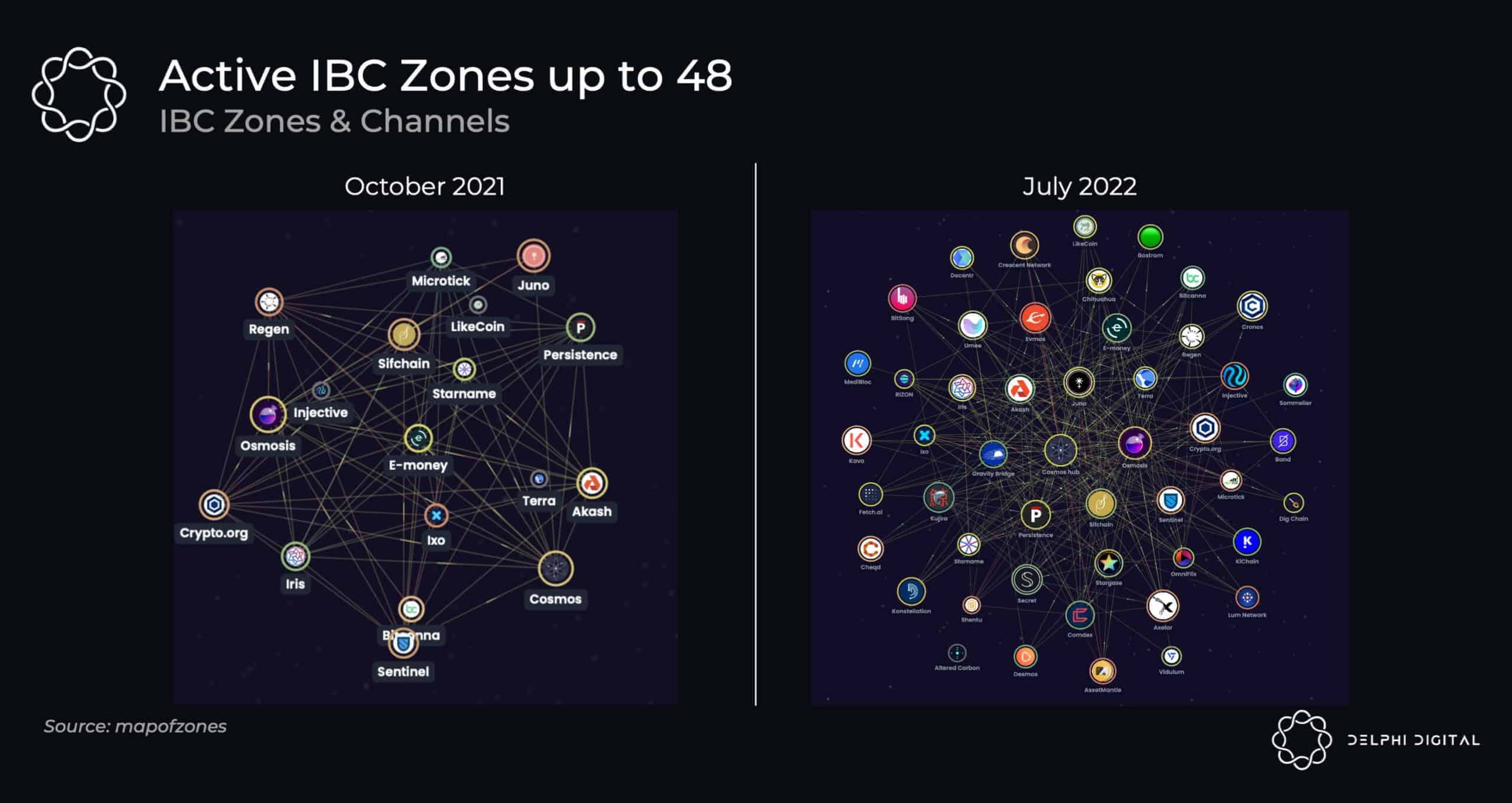
The Cosmos ecosystem has moved beyond its original boundaries. As of 2026, the Inter-Blockchain Communication (IBC) protocol connects over 200 public networks. This expansion marks a significant shift from a closed garden of Cosmos SDK chains to an open interoperability layer for the broader crypto landscape.
Originally designed to link independent blockchains within the Cosmos SDK ecosystem, IBC now reaches far beyond. The protocol integrates with Solana, Ethereum L2s, and various rollups through new IBC light clients. This allows assets and data to flow between previously isolated networks, effectively turning Cosmos into a bridge rather than just a collection of chains.
The economic weight of this connectivity is reflected in the value of the native ATOM token.
This growth is not just about adding more chains to the ledger. It is about creating a unified liquidity environment where capital can move freely across different consensus mechanisms and security models. The network scale now supports a diverse array of applications, from high-throughput DeFi on Solana to secure data availability on Celestia, all communicating through a single standard.
Technical upgrades in the 2026 roadmap
The Cosmos Stack roadmap for 2026 moves beyond theoretical interoperability to address the hard constraints of performance and modularity. As the ecosystem matures, the focus shifts from connecting isolated chains to creating a unified, high-throughput environment. This evolution is driven by specific technical improvements in the IBC protocol and the underlying Cosmos SDK, designed to support enterprise-grade requirements without sacrificing the network's decentralized ethos.
Performance and Modularity
The core of the 2026 upgrades centers on optimizing the Inter-Blockchain Communication (IBC) protocol to handle higher transaction volumes with lower latency. The ibc-go module is being refined to reduce the overhead associated with cross-chain data verification, allowing sovereign blockchains to interact more fluidly. This isn't just about speed; it's about modularity. Developers can now plug into a standardized communication layer that scales horizontally, meaning new chains can join the ecosystem without degrading the performance of existing ones.
These technical adjustments are critical for the long-term viability of cross-chain DeFi. By streamlining the data transfer mechanisms, Cosmos reduces the friction that often discourages institutional adoption. The goal is to make cross-chain interactions feel native to the user, hiding the complex cryptographic proofs behind a simple, fast interface. This approach contrasts with monolithic blockchains that struggle with congestion, offering a scalable alternative for high-frequency financial applications.
Native Proof of Authority and Privacy
Beyond raw speed, the 2026 roadmap introduces native support for Proof of Authority (PoA) consensus and enhanced privacy features. This allows chains to tailor their security models to specific use cases. For instance, a regulated financial chain can operate with a smaller set of trusted validators, ensuring faster finality and compliance, while still remaining fully interoperable with the broader Cosmos network via IBC.
Privacy is the other major pillar. New cryptographic tools are being integrated to enable confidential transactions across chains. This means assets can move between ledgers without exposing sensitive data on public ledgers, a requirement for many enterprise and institutional workflows. By embedding these features directly into the SDK, Cosmos ensures that privacy and permissioned consensus are not afterthoughts, but foundational elements of the new architecture.
How IBC Enables Cross-Chain DeFi
The Inter-Blockchain Communication (IBC) protocol transforms how independent blockchains interact. Instead of relying on centralized intermediaries to move assets between networks, IBC provides a standardized set of rules that allows sovereign chains to exchange data and tokens directly. This permissionless architecture means any chain built with the Cosmos SDK can connect to the ecosystem without a trusted third party holding the funds.
This capability is the foundation for a new generation of decentralized finance. By enabling native asset transfers, IBC allows liquidity to flow freely across different ecosystems. Users can access yield farming opportunities, lending markets, and decentralized exchanges on multiple chains simultaneously, all while maintaining the security guarantees of their home chain.
The technical mechanism behind this is the IBC relayer network. These relayers are independent nodes that monitor two connected chains, verify proofs of transaction states, and forward those proofs to the counterparty chain. Because the verification is cryptographic rather than based on trust in a central entity, the system eliminates the single points of failure that have plagued many cross-chain bridge solutions in the past.
To understand the practical impact, it helps to compare IBC’s native interoperability against traditional wrapped asset bridges. The table below highlights the differences in security models, speed, and trust assumptions.
| Feature | IBC Native | Wrapped Bridges | Lock & Mint |
|---|---|---|---|
| Security Model | End-to-end cryptographic proofs | Dependent on smart contract audits | Dependent on custodian security |
| Trust Assumptions | Minimal (relayer network) | High (centralized operator) | High (centralized operator) |
| Asset Integrity | Original token remains native | Derivative token on destination | Derivative token on destination |
| Speed | Seconds to minutes | Variable (often slower) | Variable (often slower) |
Enterprise adoption and privacy features
The 2026 Cosmos IBC roadmap marks a decisive shift toward institutional readiness. While earlier iterations focused on developer accessibility and modular flexibility, the current architecture prioritizes enterprise-grade functionalities that address the specific compliance and performance requirements of traditional finance. This evolution transforms the Cosmos stack from a playground for experimental chains into a viable infrastructure for regulated assets.
A cornerstone of this transition is the introduction of native Proof of Authority (PoA) consensus mechanisms. Unlike Proof of Stake, which relies on economic incentives, PoA allows institutions to validate blocks using verified identities. This structure provides the finality and accountability that banks and asset managers demand, enabling them to participate in blockchain networks without exposing sensitive operational data to anonymous validators.
Privacy features have also been upgraded to meet regulatory standards. New privacy-preserving technologies allow for confidential transactions and data validation without revealing underlying details. This capability is critical for institutions handling sensitive financial data, ensuring that compliance with regulations like GDPR and financial secrecy laws is maintained while still leveraging the transparency of the blockchain.
These features are not merely add-ons but are integrated into the core Cosmos SDK, allowing developers to build compliant applications from the ground up. By combining the interoperability of IBC with enterprise-ready consensus and privacy, Cosmos positions itself as the preferred layer for cross-chain DeFi that requires institutional trust and regulatory adherence.
No comments yet. Be the first to share your thoughts!