
Interchain Security v2 architecture
Interchain Security v2 represents the structural shift that defines the Cosmos IBC 2026 roadmap. Instead of every new blockchain needing to bootstrap its own validator set and security model, IBC v2 allows any Cosmos SDK chain to lease security directly from the Cosmos Hub. This moves the ecosystem from a fragmented model of isolated risk to a shared, permissionless security layer.
This architectural change lowers the barrier to entry for new applications while maintaining the high security standards of the Cosmos Hub. Chains can focus on their specific utility and governance without the massive overhead of attracting independent validators. The result is a more cohesive network where security is a public good rather than a private commodity.
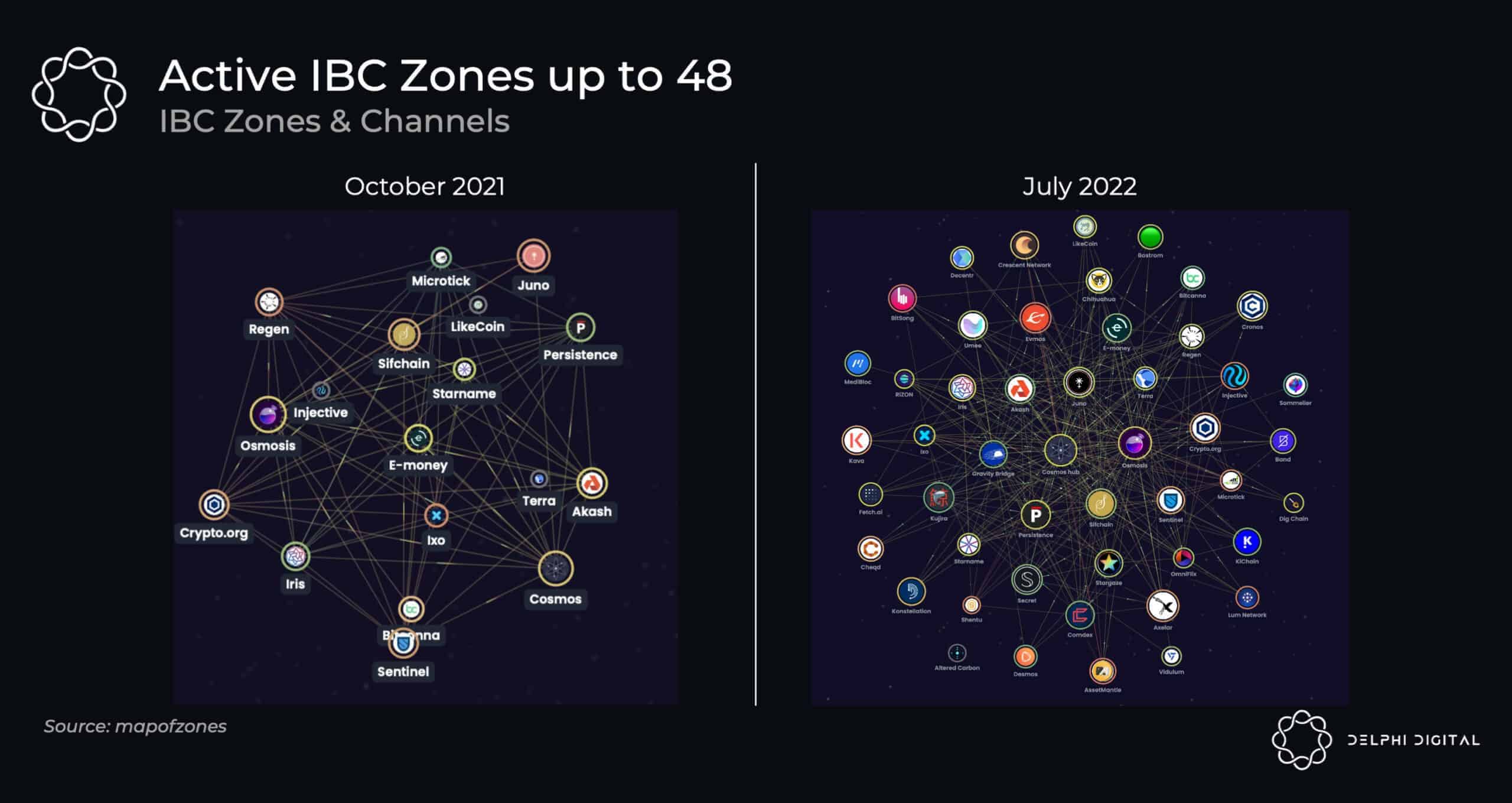
The implications for the broader Cosmos IBC 2026 ecosystem are significant. By decoupling security from individual chain launches, the protocol encourages rapid innovation and deployment. New projects can launch with immediate confidence in their security posture, knowing they are backed by the economic weight of the Cosmos Hub.
New IBC light clients for Solana and EVM
The Cosmos IBC 2026 roadmap marks a structural shift from a closed garden to an open highway. By introducing new light clients for Solana and EVM L2s, the protocol is finally bridging its native interoperability layer with the two largest ecosystems outside of Cosmos. This expansion allows IBC to connect directly to chains that previously lacked the necessary cryptographic verification tools.
Previously, connecting to these networks required trusted relayers or complex wrapping mechanisms that diluted security. With native light clients, Cosmos Hub can now verify the state of Solana and Ethereum L2s directly. This means assets and data can move across these chains with the same trust-minimized guarantees that have defined IBC since its inception. The result is a more unified interchain where liquidity and information flow freely without centralized bottlenecks.
The implications for cross-chain interoperability are significant. Developers can now build applications that leverage the speed of Solana or the developer tooling of EVM while maintaining the security model of the Cosmos ecosystem. This reduces fragmentation and allows for more complex, multi-chain user experiences that feel seamless to the end user.
To understand the performance differences between these new connections, it helps to compare the underlying mechanics. The table below outlines how native Cosmos IBC stacks up against IBC via light clients on Solana and EVM chains.
| Feature | Native Cosmos IBC | IBC via Solana Client | IBC via EVM Client |
|---|---|---|---|
| Security Model | Full light client verification | SPL light client verification | EVM state proof verification |
| Finality | ~10 seconds | ~400 milliseconds | ~12-15 seconds |
| Primary Use Case | Cosmos SDK chains | High-throughput assets | EVM-compatible dApps |
This expansion is not just about adding more chains; it is about making the Inter-Blockchain Communication protocol the universal standard for secure, trust-minimized communication. As Cosmos IBC 2026 progresses, we expect to see a surge in cross-chain applications that were previously impossible due to technical or security constraints.
Relayer optimization and performance
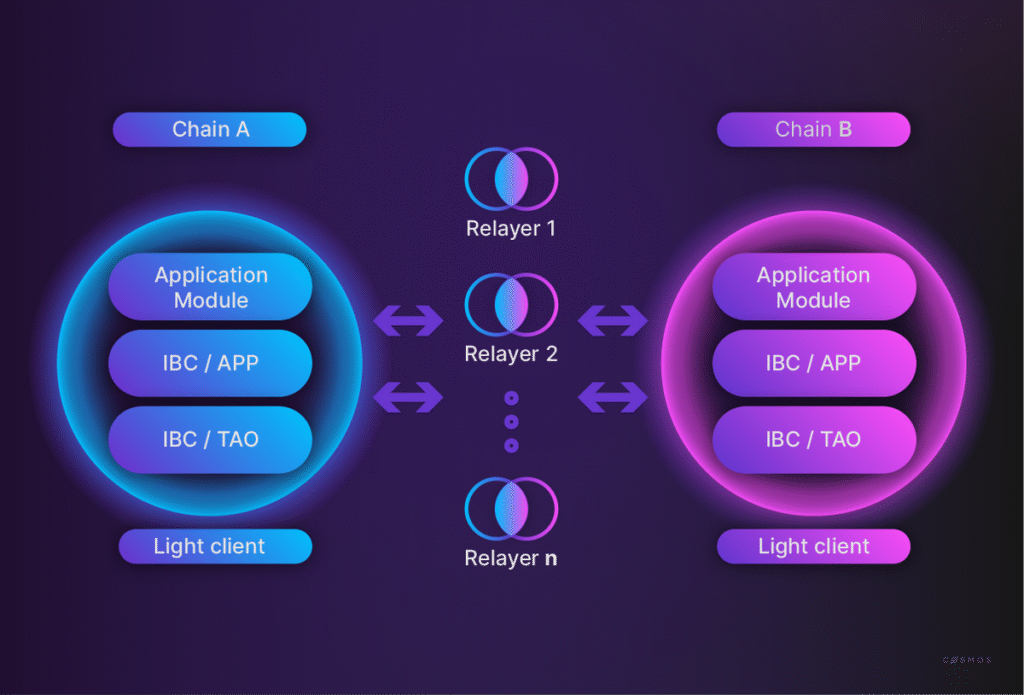
The 2026 Cosmos IBC landscape is defined by a shift from mere connectivity to high-efficiency data transport. As the ecosystem matures, the operational burden on relayers—the software that moves packets between chains—has become the primary bottleneck for user experience. The Cosmos Stack roadmap for 2026 addresses this by prioritizing performance improvements and modularity, aiming to make interchain communication faster and more reliable than ever before.
Relayer efficiency is no longer just a technical detail; it is the backbone of the Cosmos IBC experience. In 2026, the focus is on reducing latency and lowering costs for packet transmission. This involves optimizing the underlying code to handle higher throughput without sacrificing security. The goal is to make cross-chain transfers feel instantaneous, removing the friction that previously deterred mainstream adoption.
Interchain Security v2 impact
Interchain Security v2 plays a pivotal role in this optimization. By allowing smaller chains to lease security from the Cosmos Hub, it standardizes the infrastructure that relayers must support. This standardization reduces the complexity of maintaining multiple, disparate security models, allowing relayer operators to focus on speed and efficiency rather than patching security gaps. The result is a more robust network where data moves freely and securely across the interchain.
The 2026 Cosmos Stack roadmap
The official Cosmos Stack roadmap for 2026 outlines specific technical upgrades designed to enhance network performance. These include native Proof of Authority options and improved privacy features, which require relayers to adapt their packet handling mechanisms. The roadmap emphasizes enterprise-focused functionalities, ensuring that the underlying architecture can support high-volume, low-latency transactions required by institutional users.
Lowering latency for users
Latency reduction is the most visible benefit of these optimizations. Users expect cross-chain swaps and transfers to complete in seconds, not minutes. New relayer architectures in 2026 leverage advanced batching and parallel processing to minimize wait times. This improvement is critical for maintaining liquidity across the Cosmos ecosystem, as high latency can lead to arbitrage opportunities and user dissatisfaction.
Cost efficiency in packet transmission
Beyond speed, cost efficiency is paramount. The 2026 roadmap includes measures to reduce the gas fees associated with IBC packet transmission. By optimizing the data structures used in packet headers, relayers can process more packets per block, driving down the cost per transaction. This makes Cosmos IBC competitive with other interchain solutions, particularly for smaller, high-frequency transactions.
The convergence of Interchain Security v2 and the Cosmos Stack roadmap creates a synergistic effect. Relayers are no longer just data couriers; they are integral components of a high-performance financial infrastructure. As the network grows, these optimizations will ensure that Cosmos IBC remains the gold standard for cross-chain communication in 2026 and beyond.
Cosmos Stack roadmap 2026 features
The Cosmos Stack is shifting focus toward performance, modularity, and enterprise-grade functionality in its 2026 roadmap. These updates are designed to support the upcoming Cosmos IBC 2026 transition, specifically IBC 2.0, by providing the infrastructure needed for higher throughput and stricter compliance.
Native Proof of Authority and Privacy
A major pillar of the 2026 update is the introduction of native Proof of Authority (PoA) consensus. This feature allows chains to operate with known, vetted validators, which is essential for institutional adoption and regulatory compliance. Alongside PoA, the roadmap includes built-in privacy features, enabling transactions to remain confidential while still verifying validity across the interchain.
Modularity and IBC 2.0 Support
The roadmap emphasizes improved modularity within the Cosmos SDK, allowing developers to customize chain configurations more easily. These structural improvements are critical for IBC 2.0, which aims to streamline cross-chain communication and reduce latency. By refining the underlying stack, Cosmos ensures that IBC 2.0 can handle the demands of a more interconnected digital asset landscape.
Market Impact and Ecosystem Trends
The evolution of the Cosmos IBC 2026 landscape hinges on how Interchain Security v2 reshapes value accrual and operational reliability. As the protocol matures, the primary market implication centers on the stability of ATOM staking yields and the subsequent attraction of total value locked (TVL) into the ecosystem.
Interchain Security v2 addresses the historical fragmentation of security models by allowing consumer chains to lease security from the Cosmos Hub. This shift reduces the barrier to entry for new zones while ensuring that stakers are compensated for the risk they underwrite. For ATOM holders, this creates a more predictable yield environment, provided the demand for leased security remains robust. The competitive landscape for cross-chain solutions is tightening, forcing Cosmos to demonstrate superior reliability compared to general-purpose interoperability layers.
Market sentiment often correlates with the health of the underlying interchain traffic. When consumer chains successfully deploy and maintain high-value applications, the demand for ATOM increases. Conversely, a slowdown in zone expansion can pressure staking yields. Investors are watching for signs of sustained TVL growth in major Cosmos zones, which serves as a leading indicator for the ecosystem's ability to capture value from the broader multi-chain narrative.
No comments yet. Be the first to share your thoughts!