
The Cosmos IBC 2026 Market Context
The Cosmos ecosystem in 2026 has matured beyond its early days of simple token transfers. The Inter-Blockchain Communication (IBC) protocol, originally launched in 2021, now serves as the backbone for a complex network of interconnected chains. According to recent analysis, IBC is more advanced and widely deployed than competing cross-chain solutions, active across 115+ networks. This shift marks a transition from experimental interoperability to robust, production-grade interchain applications.
Today’s Cosmos landscape is defined by security and composability. Rather than isolated silos, chains now share security models and data with unprecedented ease. This evolution allows developers to build applications that leverage the unique strengths of multiple blockchains without sacrificing safety. The result is an ecosystem where value and data flow freely, creating a more resilient and functional "Internet of Blockchains."
Market sentiment reflects this structural growth. While short-term price action for ATOM may fluctuate, the underlying utility of IBC continues to expand. Developers are increasingly prioritizing chains that support advanced IBC features, such as Interchain Security, which allows consumer chains to lease security from the Cosmos Hub. This model reduces the barrier to entry for new projects and strengthens the entire network against attacks.
As we look at the current state of Cosmos, the focus is less on speculative hype and more on sustainable infrastructure. The protocol’s ability to handle diverse data types and complex state transitions has made it a preferred choice for enterprises and decentralized applications seeking reliable cross-chain communication. This foundational strength positions Cosmos IBC as a critical component of the broader Web3 ecosystem in 2026.
Relayer infrastructure and IBC-Go latency
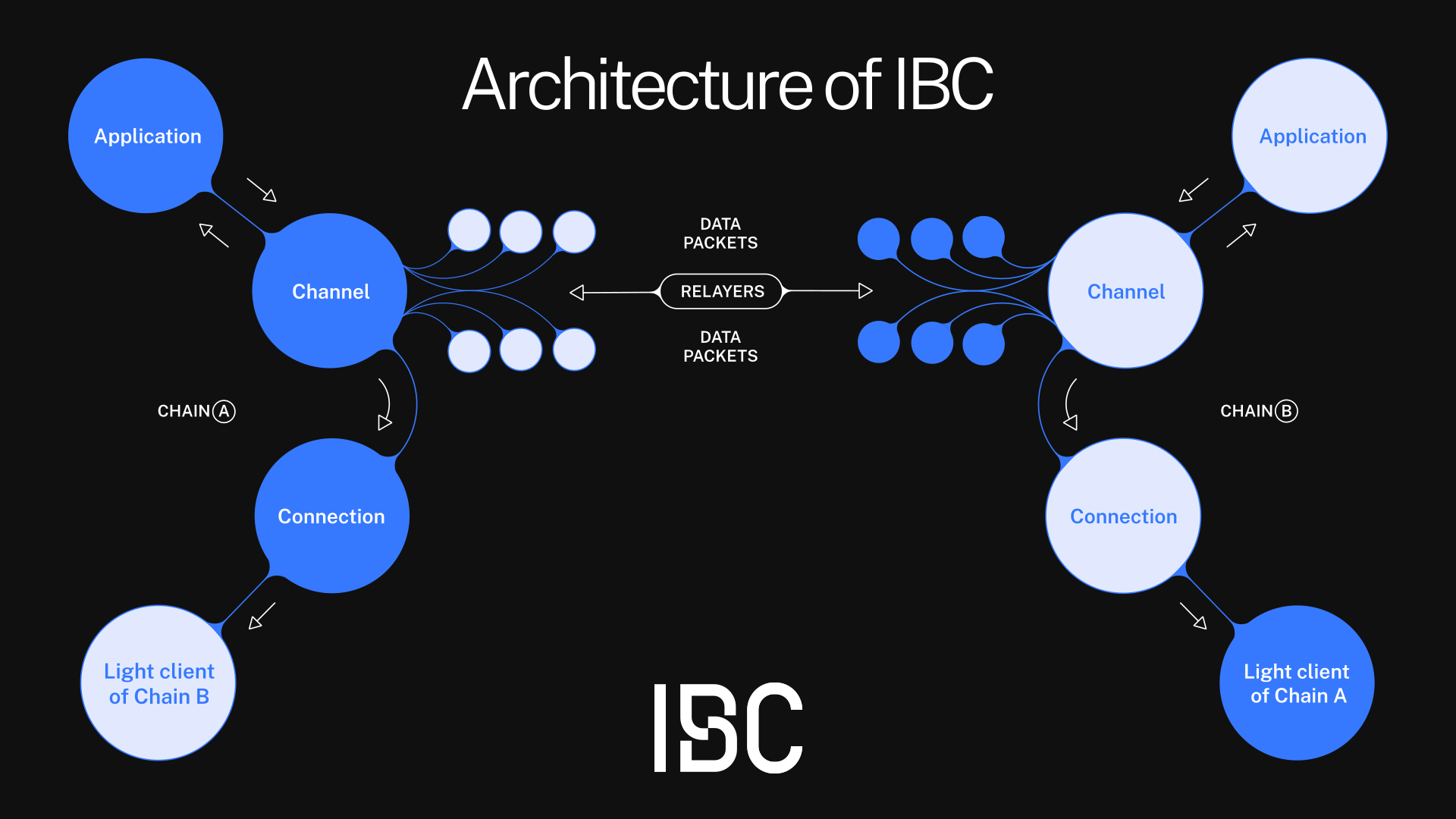
The backbone of Cosmos IBC is the relayer, the software that listens to two independent blockchains and forwards packets between them. In 2026, improvements in both the underlying IBC-Go protocol and the relayer clients have significantly reduced the time it takes for data to cross chains. This shift from "eventual consistency" to near-instant finality is critical for high-frequency DeFi applications that cannot afford the latency penalties of earlier IBC iterations.
Relayer infrastructure has moved away from generic, single-threaded polling to optimized, event-driven architectures. Modern relayers now leverage advanced indexing and parallel processing to detect state changes across multiple chains simultaneously. This architectural shift reduces the "blind spots" where packets might be missed or delayed, ensuring that liquidity movements are processed in the order they were initiated. The result is a more predictable experience for users bridging assets between zones like Osmosis and Cosmos Hub.
On the protocol side, IBC-Go versions have introduced tighter packet lifecycle management. Earlier versions often suffered from timeouts and misaligned acknowledgments, forcing users to wait for timeout periods before funds could be reclaimed or redirected. Newer releases streamline the handshake process, allowing for faster confirmation of packet delivery. This means that cross-chain swaps, which previously took several minutes to settle, now complete in seconds, aligning Cosmos with the speed expectations of modern decentralized finance.
These technical improvements have tangible effects on network activity. As latency drops, the utility of IBC expands beyond simple token transfers to include complex, multi-hop atomic swaps and cross-chain lending protocols. The reliability of the underlying transport layer is now a primary driver of ecosystem growth, as developers can build sophisticated applications without worrying about the fragility of the interchain connection.
Multi-chain security upgrades
Interchain Security v2 transforms how the Cosmos Hub secures the broader network. Instead of every new zone bootstrapping its own validator set from scratch, the Hub now leases its security to them. This model centralizes the validator set, allowing new chains to inherit the Hub’s economic weight and cryptographic strength immediately upon launch.
This shift moves the ecosystem away from fragmented security models. New zones no longer need to wait for months to attract validators. They connect to the Hub’s existing pool, reducing the "cold start" problem that has historically plagued new blockchain launches. The result is a more cohesive network where security is a shared resource rather than a siloed asset.
The architecture relies on the Inter-Blockchain Communication protocol to relay state proofs and security updates between the Hub and consumer chains. This ensures that if a consumer chain attempts to misbehave, the Hub can slash its bonded tokens, maintaining the integrity of the entire interchain. It is a mechanism that binds the fate of new zones to the stability of the Hub.
| Feature | Legacy Model | Interchain Security v2 |
|---|---|---|
| Validator Set | Independent per chain | Shared with Hub |
| Launch Time | Months to bootstrap | Immediate |
| Security Source | Chain-specific stake | Hub stake + consumer fee |
Cross-chain interoperability use cases
Cross-chain interoperability is the practical application of IBC middleware, moving beyond simple token transfers to complex, multi-chain logic. By allowing independent blockchains to share data as bytes, IBC enables applications that span multiple networks without relying on centralized bridges. This capability is what distinguishes the Cosmos ecosystem from more fragmented alternatives.
Atomic swaps
Atomic swaps allow users to exchange assets between two different chains in a single, trustless transaction. If either side of the trade fails, the entire transaction reverts, ensuring no funds are lost. This mechanism eliminates the need for third-party custodians, reducing counterparty risk while maintaining the security guarantees of each individual chain.
Multi-chain smart contracts
Multi-chain smart contracts execute logic across multiple blockchains simultaneously. Developers can write applications that trigger actions on one chain based on events from another, creating a unified experience for users. This is particularly useful for decentralized finance (DeFi) protocols that need to access liquidity across the entire IBC ecosystem.
Decentralized identity
Decentralized identity (DID) solutions use IBC to verify credentials across chains. A user can obtain an identity credential on one chain and use it to authenticate on another without re-verifying their identity. This creates a seamless, portable identity layer that works across the entire Cosmos network.
IBC vs. Other Interoperability Standards
| Feature | Cosmos IBC | Polkadot XCMP | CCIP |
|---|---|---|---|
| Maturity | Highly mature, 115+ networks | Active, but less deployed | Enterprise-focused |
| Speed | Near-instant finality | Block-dependent | Variable |
| Cost | Low gas fees | Moderate | Higher enterprise fees |
| Flexibility | Byte-level data sharing | Parachain-specific | Chainlink-dependent |
IBC is more mature and widely deployed than alternatives like Polkadot's XCMP or Chainlink's CCIP. Its active presence across 115+ networks provides a robust foundation for the use cases described above. For developers, this means fewer integration hurdles and a larger potential user base.
| Feature | IBC | XCMP | CCIP |
|---|---|---|---|
| Networks | 115+ | Active | Enterprise |
| Finality | Near-instant | Block-dependent | Variable |
| Cost | Low | Moderate | High |
Cosmos Hub updates and governance
The Cosmos Hub continues to refine its governance framework in 2026, prioritizing proposals that directly support Inter-Blockchain Communication efficiency. Recent upgrades focus on streamlining the fee market mechanism, ensuring that cross-chain transactions remain cost-effective and predictable for users across the ecosystem.
Governance activity has shifted toward technical optimizations that reduce latency and improve the reliability of the IBC relayer network. By addressing these structural bottlenecks, the Hub aims to solidify its role as the central anchor for the Cosmos Interchain Security model, allowing connected zones to benefit from shared security without compromising their autonomy.
No comments yet. Be the first to share your thoughts!