
Why Cosmos IBC 2026 Matters Now
The Cosmos Hub is no longer a siloed experiment. In 2026, the Cosmos IBC protocol has evolved into the central nervous system of multi-chain DeFi, connecting over 200 public networks. This expansion transforms the "Internet of Blockchains" from a fragmented collection of isolated ledgers into a deeply interconnected financial layer.
Previously, interoperability meant bridging assets through complex, often risky wrapped-token mechanisms. Today, IBC allows direct, trust-minimized communication between independent ledgers. The protocol now supports connections to Solana, Ethereum L2s, and various rollups through new IBC light clients, enabling seamless data and asset transfers without leaving the security perimeter of the source chain.
This shift is critical for developers and users alike. The ability to move value and information across heterogeneous blockchains reduces fragmentation and enhances capital efficiency. As the ecosystem matures, IBC serves as the foundational standard for cross-chain liquidity, making it the primary focus for anyone navigating the current DeFi landscape.
The growth is not just theoretical. Official channels confirm that IBC integration is accelerating, with dozens of new chains launching with native IBC support. This connectivity allows the Cosmos ecosystem to act as a hub, aggregating liquidity and functionality from across the broader crypto space rather than competing in isolation.
New Light Clients Connect Non-Cosmos Chains
For years, the Inter-Blockchain Communication (IBC) protocol operated as a walled garden. It excelled at connecting Cosmos SDK chains, but it could not natively speak to Solana, Ethereum, or other non-Cosmos networks. The architecture required every participating chain to run the same software stack, creating a significant barrier to broader adoption.
The 2026 breakthrough shifts this paradigm by introducing IBC light clients for external networks. Instead of requiring a Solana or EVM chain to rewrite its core logic, Cosmos chains can now run lightweight proof-verification clients that trustlessly observe the state of these external ledgers. This technical leap allows Cosmos to treat Solana, EVM L2s, and rollups as first-class peers in the IBC ecosystem.
Cosmos devs test IBC protocol between Hub and Ethereum to boost interoperability | The Block
This expansion transforms IBC from a local network protocol into a universal interoperability layer. By verifying proofs from outside the Cosmos ecosystem, the Hub can facilitate atomic swaps and data transfers with Solana and EVM chains without relying on centralized bridges or wrapped assets. The result is a multi-chain DeFi landscape where liquidity and data flow freely across previously isolated silos.
The market is already pricing in this connectivity shift. Below is the live technical chart for ATOM/USDT, reflecting investor sentiment as these new light client capabilities come online.
Unified liquidity and cross-chain lending
Multi-chain DeFi in 2026 is moving past simple token swaps. The focus has shifted to unified liquidity pools and cross-chain lending, where capital flows freely between independent blockchains without leaving the security perimeter of the Inter-Blockchain Communication (IBC) protocol. This shift reduces the fragmentation that has historically plagued decentralized finance.
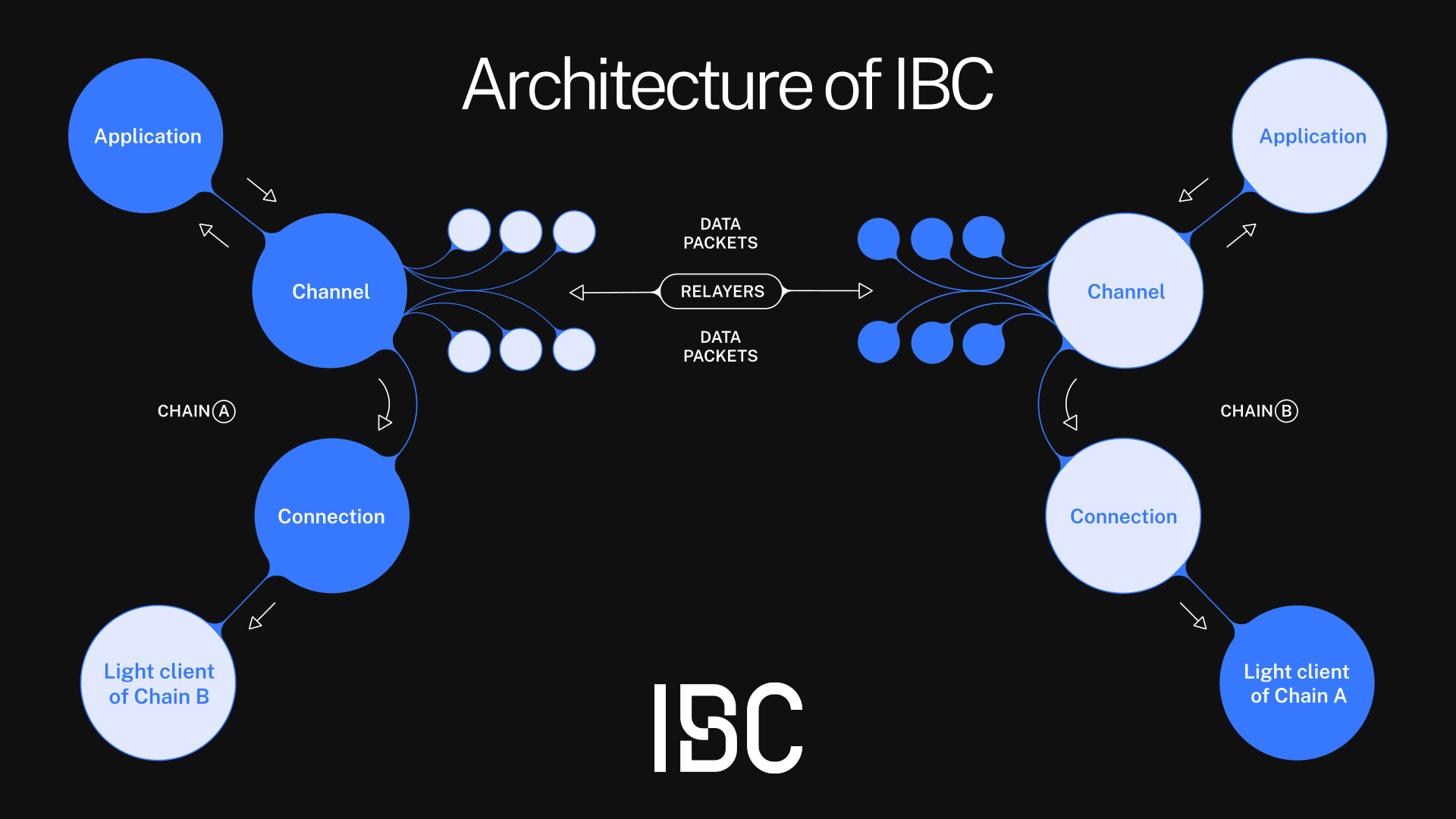
Cross-chain lending allows users to borrow assets on one chain while using collateral held on another. IBC enables this by verifying state transitions between chains, eliminating the need for trusted third-party bridges. This native security model ensures that assets move with cryptographic proof rather than relying on centralized validators or complex smart contract wrappers that often introduce vulnerabilities.
The result is a more efficient capital market. Liquidity is no longer siloed within single-chain ecosystems. Instead, it aggregates across the Cosmos network, allowing for deeper order books and better price discovery. This interconnectedness mirrors the early internet, where different networks could exchange data through standardized protocols, creating a robust and scalable financial infrastructure.
| Feature | Traditional Bridges | IBC Native |
|---|---|---|
| Security Model | Trusted validators or multisigs | Cryptographic light clients |
| Asset Transfer | Wrapped tokens (synthetic) | Original assets (native) |
| Counterparty Risk | High (bridge smart contracts) | Low (chain-specific consensus) |
| Liquidity Fragmentation | High (isolated pools) | Low (unified pools) |
Cross-Chain Security and Trust Models
Transferring assets between independent blockchains introduces a unique risk profile: how do you trust a chain you don’t control? The Inter-Blockchain Communication (IBC) protocol solves this not by centralizing validators, but by relying on cryptographic proof and light clients. This approach ensures that security is maintained without creating a single point of failure or relying on external oracles that could be manipulated.
At the core of IBC security is the light client. Instead of trusting a remote chain’s validators to act honestly, your chain verifies the header of the remote chain using cryptographic proofs. If the remote chain’s validators sign a fraudulent state transition, the light client detects the inconsistency and rejects the packet. This mechanism allows the Cosmos Hub to trust the security of a smaller, newer chain without needing to know its validators personally. The system is designed to be trust-minimized, meaning you trust the math, not the actors.
This model scales because each chain only needs to maintain a light client for the chains it interacts with directly. There is no need for a global consensus layer or a centralized bridge operator. The protocol’s rules are open-source and auditable, with the canonical implementation hosted on GitHub. By embedding security into the communication layer itself, IBC allows for a modular blockchain internet where each chain retains its sovereignty while participating in a shared security model.
Ecosystem Growth and Network Effects
The Cosmos network has evolved from a niche experiment into a foundational layer for multi-chain finance. Today, IBC connects more than 200 public networks, linking independent ledgers into a single, interoperable internet of blockchains. This scale transforms isolated chains into a cohesive system where value and data flow without friction.
For developers, this growth means a larger addressable market. Instead of building in a silo, teams can tap into liquidity and users already present on other zones. The network effect compounds as each new connection increases the utility of the entire ecosystem. Developers no longer need to bootstrap communities from scratch; they can plug into existing hubs and distribute their applications across dozens of chains instantly.
Users benefit from the same aggregation. Assets that were previously trapped on specific blockchains can now move freely to where they are most productive. Whether bridging to an EVM L2, a Solana rollup, or another Cosmos zone, the standardization provided by IBC reduces the complexity of cross-chain interactions. This seamless connectivity is driving the next wave of DeFi innovation, making multi-chain strategies viable for mainstream adoption.
No comments yet. Be the first to share your thoughts!