
The Cosmos Stack 2026 roadmap
The Cosmos Stack 2026 roadmap shifts focus from experimental connectivity to enterprise-grade reliability. This update prioritizes performance, modularity, and specialized consensus mechanisms designed for institutional adoption. By refining the core SDK and IBC protocol, the ecosystem aims to support higher throughput and stricter regulatory compliance without sacrificing sovereignty.
Performance remains the primary engineering target. The 2026 updates introduce optimizations to the Tendermint consensus engine, reducing finality times and increasing transaction throughput. These changes are not merely incremental; they are structural adjustments intended to handle the volume expected from traditional finance integrations. Faster finality reduces counterparty risk, a critical requirement for institutional capital deployment.
Modularity is being tightened through native support for Proof of Authority (PoA) and enhanced privacy features. While Cosmos has long championed interoperability, the 2026 stack adds governance layers that allow chains to opt into specific security models. PoA provides a familiar governance structure for regulated entities, while privacy enhancements ensure transaction data remains confidential where required by law. This flexibility allows builders to tailor their chains to specific use cases rather than adopting a one-size-fits-all approach.
The Inter-Blockchain Communication (IBC) protocol serves as the connective tissue for these improvements. IBC remains secure and permissionless, but the underlying infrastructure is being hardened to support these new enterprise features. The goal is a single interoperable network where sovereign chains can interact seamlessly, sharing security and data without compromising their individual governance.
Extending IBC to Ethereum and Solana
Cosmos is moving beyond its native ecosystem to connect with the two largest non-Cosmos blockchains: Ethereum and Solana. This expansion marks a shift from a closed garden to an open interoperability layer. By treating these major chains as peers rather than external islands, Cosmos aims to make the Inter-Blockchain Communication protocol the standard for cross-chain data and asset movement.
The core of this expansion lies in the new light client architecture. Instead of relying on centralized bridges or complex wrapped tokens, IBC uses light clients to verify the state of remote chains directly. This allows the Cosmos Hub to trustlessly communicate with Ethereum and Solana, reducing counterparty risk and simplifying the security model for users moving assets between networks.
Development efforts are already in the testing phase. Cosmos developers have been running tests to ensure the protocol can handle the high throughput and finality requirements of Ethereum. These tests are critical for establishing a reliable bridge that can support the growing demand for cross-chain liquidity without compromising the security guarantees that IBC is known for.
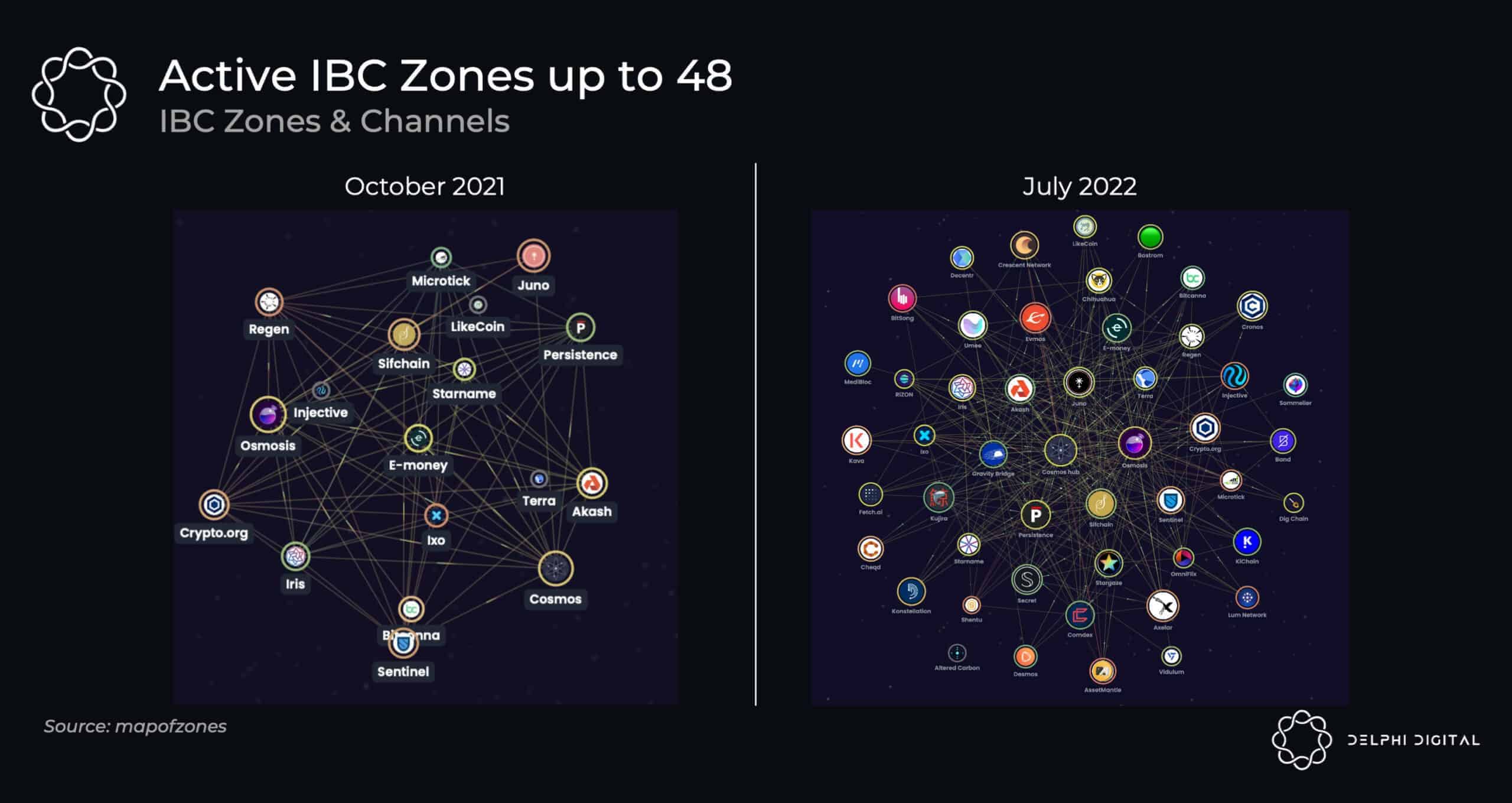
The strategic goal is to make IBC the default communication layer for the broader blockchain industry. By integrating with Ethereum and Solana, Cosmos positions itself as the hub that connects the fragmented landscape of Layer 1s and Layer 2s. This move could redefine how value flows across the decentralized web, making interoperability seamless and secure.
How IBC reduces liquidity fragmentation
Traditional multi-chain DeFi relies on wrapped assets and centralized bridges to move value between networks. This architecture creates liquidity fragmentation, where capital is trapped in isolated pools and users face high slippage and counterparty risk. Cosmos IBC changes this by enabling sovereign chains to transfer tokens and data directly, without relying on a centralized intermediary.
By treating interoperability as a native protocol feature rather than a third-party add-on, IBC allows liquidity to flow freely across the Cosmos ecosystem. This reduces the need for multiple wrapped versions of the same asset, which often suffer from disjointed markets and security vulnerabilities. Instead, assets move in their native form, preserving their original security guarantees and reducing the attack surface for exploiters.
The result is improved capital efficiency. Liquidity providers no longer need to fragment their positions across dozens of isolated chains to capture yield. They can deploy capital once and access opportunities across the entire network of interconnected blockchains. This seamless asset transfer model encourages deeper pools and tighter spreads, making DeFi more accessible and efficient for all participants.
| Feature | Traditional Bridges | Cosmos IBC | Liquidity Impact |
|---|---|---|---|
| Asset Form | Wrapped tokens | Native tokens | Reduces fragmentation |
| Security Model | Centralized validators | Light client verification | Lower counterparty risk |
| Capital Efficiency | Fragmented pools | Unified liquidity | Higher yield potential |
| Cross-Chain Speed | Slow finality | Near-instant | Better user experience |
This shift from a fragmented, bridge-dependent model to a unified, native interoperability standard is critical for the future of DeFi. As more chains adopt IBC, the network effect strengthens, creating a more robust and efficient financial infrastructure.
Enterprise tools and privacy upgrades
The 2026 Cosmos roadmap shifts focus toward institutional-grade infrastructure. The Interchain Foundation’s technology overview emphasizes that the Cosmos Stack is designed for scalable, secure, and interconnected Layer 1 blockchains. This architecture relies on the Inter-Blockchain Communication protocol to facilitate data and asset transfers, but 2026 introduces specific features to meet stricter regulatory and operational demands.
A primary driver for this shift is the introduction of native Proof of Authority (PoA). Unlike traditional Proof of Stake, PoA allows entities to validate blocks based on their known and verified identity. This mechanism provides the accountability required by financial institutions and governments, offering the control and security needed to adapt to evolving regulatory landscapes. It transforms the chain from a permissionless experiment into a compliant utility.
Privacy upgrades accompany these governance changes. As Cosmos empowers financial institutions with solutions for scalability, it must also address data confidentiality. The 2026 updates prioritize privacy features that protect sensitive transaction data while maintaining auditability. This balance is critical for enterprise adoption, ensuring that interoperability does not come at the cost of commercial secrecy.
The Cosmos Stack roadmap for 2026 explicitly highlights these enterprise-focused functionalities. By combining modularity with PoA and privacy, the network aims to bridge the gap between decentralized innovation and traditional financial infrastructure. This evolution positions Cosmos IBC not just as a technical standard, but as a viable foundation for regulated digital assets.
No comments yet. Be the first to share your thoughts!