
What is Cosmos IBC 2.0?
Cosmos IBC 2.0 is a streamlined redesign of the original IBC (Inter-Blockchain Communication) protocol, often referred to as "IBC Classic." While the original IBC successfully established a standard for authenticated communication between independent blockchains, it came with significant architectural overhead. IBC 2.0 addresses this by simplifying the underlying structure, reducing complexity, and expanding connectivity to environments that were previously difficult or impossible to support, such as gas-metered chains like Ethereum.
At its core, IBC 2.0 remains an end-to-end protocol for reliable, authenticated communication between modules on separate distributed ledgers. However, the v2 specification reworks how these connections are established and maintained. The goal is not to reinvent the wheel, but to make the wheel lighter and more versatile. By stripping away unnecessary layers and optimizing the data structures involved in cross-chain messaging, IBC 2.0 lowers the barrier to entry for developers and reduces the computational cost for users.
Simplified Architecture
The most immediate benefit of IBC 2.0 is the reduction in architectural complexity. In the classic IBC model, setting up and maintaining connections between chains required substantial code and configuration. IBC 2.0 simplifies this process, making it easier for new chains to join the Cosmos ecosystem and for existing chains to interact with each other. This simplification translates to faster integration times and fewer points of failure, which is critical for a growing DeFi landscape that relies on seamless cross-chain liquidity.
Gas-Metered Environment Support
Perhaps the most significant expansion in IBC 2.0 is its ability to connect with gas-metered environments. Traditional IBC was designed for chains that operated on a different economic model, where transaction fees were handled differently. IBC 2.0 introduces mechanisms to handle gas payments and metering in a way that is compatible with Ethereum-like chains. This opens the door for direct, efficient communication between Cosmos-based chains and Ethereum, two of the largest ecosystems in the crypto space. This connectivity is essential for creating a truly interoperable multi-chain future.
Concrete Benefits for Developers and Users
For developers, IBC 2.0 means a cleaner codebase and easier integration paths. The simplified setup reduces the time and resources needed to build cross-chain applications. For users, the benefits are felt in lower transaction costs and faster message finality. By optimizing the protocol's architecture, IBC 2.0 ensures that cross-chain transactions are more efficient and reliable. This is not just a technical upgrade; it is a fundamental shift that makes cross-chain DeFi more accessible and robust.
Simplified Connection Creation
Setting up a new interchain connection has historically been one of the steepest hurdles for new chains entering the Cosmos ecosystem. Before IBC 2.0, operators had to manually configure complex relay logic, manage light client parameters, and ensure precise packet lifecycle handling. This process was not only time-consuming but also prone to configuration errors that could leave assets stranded or security vulnerable. IBC 2.0 fundamentally changes this dynamic by automating the heavy lifting behind the scenes.
The core improvement lies in the separation of concerns. IBC 2.0 introduces a more standardized protocol layer that handles the intricate details of light client verification and packet forwarding. New chains no longer need to build custom relay infrastructure from scratch. Instead, they can leverage pre-built, audited modules that integrate seamlessly with existing IBC-compatible chains. This reduces the technical barrier to entry, allowing developers to focus on application logic rather than network plumbing.
For DeFi users and developers, this simplification translates directly into faster deployment cycles and lower operational costs. The permissionless nature of the network is preserved, but the friction of joining it is significantly reduced. A new chain can now establish trust and connectivity with the wider ecosystem in a fraction of the time it previously required. This architectural shift encourages more experimentation and innovation, as the risk of misconfiguration drops and the speed of iteration increases.
By streamlining the connection process, IBC 2.0 ensures that the Cosmos network remains accessible and scalable. It removes the administrative burden that often stifled smaller projects, paving the way for a more robust and interconnected DeFi landscape. The result is a network that grows organically, with new participants able to plug into the ecosystem with minimal overhead and maximum security.
ZK Proofs Lower Verification Costs
The primary bottleneck for cross-chain liquidity has always been the cost of proving that a message was actually sent. Traditional IBC relied on light client verification, which required validators to submit frequent, computationally heavy proofs to the destination chain. For Ethereum, this meant gas fees that often exceeded the value of the transfer itself, effectively locking high-value DeFi interactions behind a paywall.
IBC v2 solves this by integrating Succinct’s Processor SP1, a zero-knowledge virtual machine (zkVM). Instead of verifying every individual block, the system aggregates state transitions into a single, compact cryptographic proof. This proof is significantly smaller and faster to verify than traditional light client data, slashing the computational load required on the destination chain.
This architectural shift transforms IBC from a niche protocol for low-cost chains into a viable infrastructure layer for Ethereum and other high-fee L1s. By reducing verification costs from dollars to cents, it enables micro-transactions and high-frequency DeFi strategies that were previously economically unfeasible. Developers can now build applications that rely on cross-chain data without worrying about gas volatility eroding user margins.
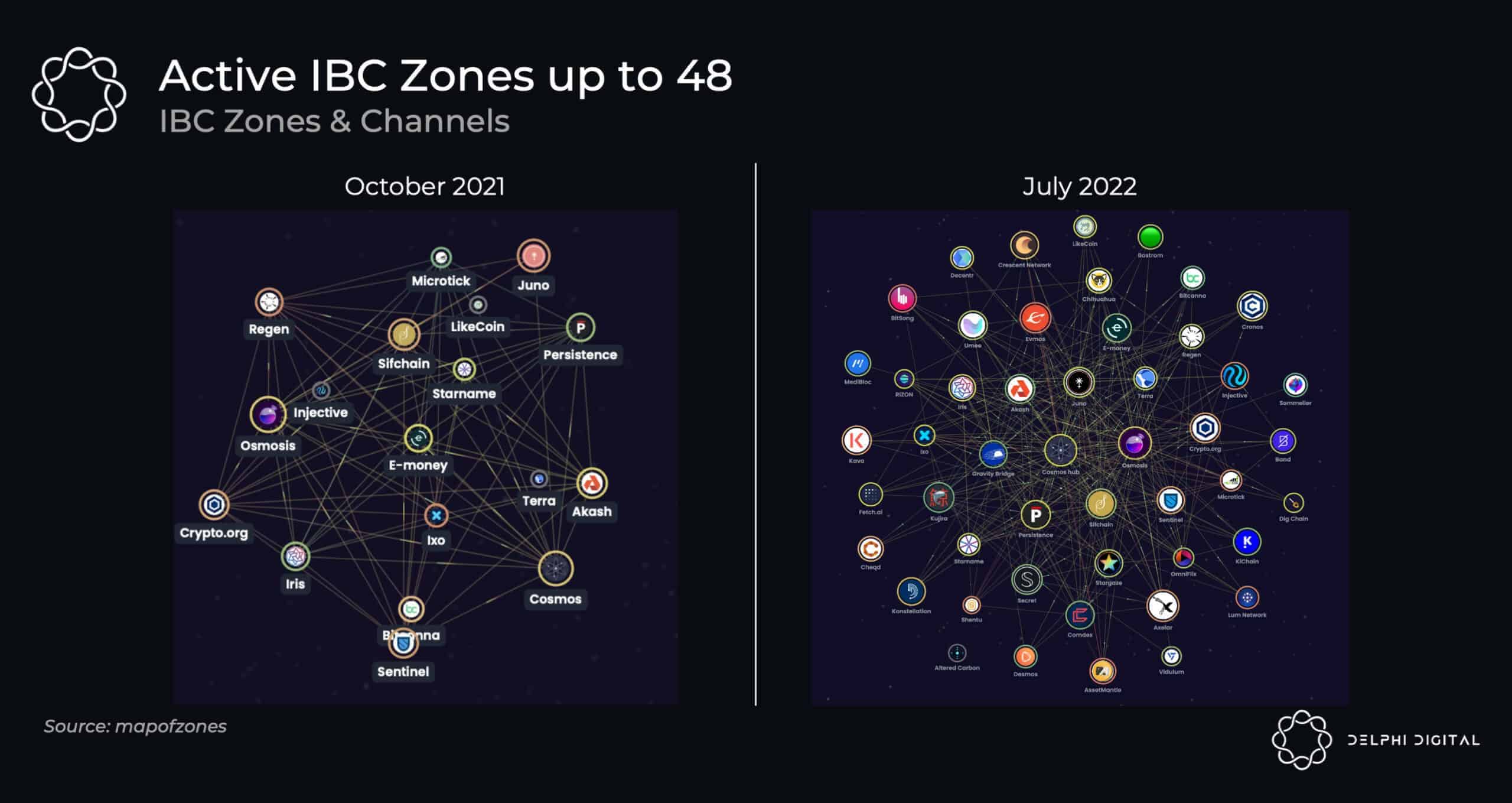
The result is a more unified liquidity landscape. Assets can move freely between Cosmos and Ethereum without the friction of prohibitive fees. This doesn't just lower costs; it simplifies the developer experience. With verification handled efficiently by the zkVM, teams can focus on building user-facing features rather than optimizing for gas efficiency. This is the foundational step toward true cross-chain composability.
Gas-Metered Environments Enabled
IBC 2.0 removes the final major barrier to universal interoperability: gas metering. Previous iterations of the Inter-Blockchain Communication protocol operated primarily within the Cosmos ecosystem, where chains shared a common native token standard and predictable transaction costs. Connecting to external networks like Ethereum presented a significant architectural hurdle. Ethereum and other EVM-compatible chains rely on complex, dynamic gas pricing and distinct execution environments that IBC Classic could not natively interpret or verify.
The solution lies in integrating zero-knowledge (zk) technology directly into the verification layer. By leveraging a zkVM such as Succinct’s Processor SP1, IBC 2.0 can generate cryptographic proofs that verify IBC packets within the target environment. This allows gas-metered chains to accept IBC messages without needing to run the full IBC stack or understand the source chain’s internal state. The proof serves as a single, verifiable signal that the cross-chain transfer occurred correctly, satisfying the gas requirements of the destination chain.
This shift transforms cross-chain connectivity from a specialized, high-cost operation into a standard, cost-effective utility. For developers, it simplifies the setup required to bridge assets or pass messages to Ethereum, eliminating the need for complex custom bridges or heavy middleware. For users, it means lower fees and faster finality when interacting with applications across different ecosystems. IBC 2.0 effectively turns the entire blockchain landscape into a single, interconnected network, regardless of the underlying consensus or gas mechanisms.
Impact on Cross-Chain DeFi 2026
The transition to IBC 2.0 shifts cross-chain DeFi from a manual, high-friction process to an automated infrastructure layer. For developers, the removal of manual relayer management and the introduction of shared security models significantly lower the barrier to entry. This architectural shift allows protocols to focus on product innovation rather than maintaining complex bridge infrastructure.
Lower transaction costs and simplified connectivity directly foster deeper liquidity. When moving assets between chains becomes as seamless as a local transfer, liquidity fragmentation decreases. Users no longer need to weigh high bridge fees against potential yield, encouraging them to deploy capital across multiple zones within the Cosmos ecosystem. This increased velocity of capital enhances composability, allowing protocols to build on top of each other’s liquidity pools with minimal friction.
By 2026, these improvements are expected to standardize cross-chain interactions. Instead of relying on fragile, custom bridges, DeFi applications will utilize IBC 2.0’s native security guarantees. This creates a more robust environment for complex financial instruments that require reliable, low-latency communication between independent blockchains. The result is a unified market where value flows freely, mirroring the efficiency of traditional centralized finance without sacrificing decentralization.
Common Questions About IBC 2.0
IBC 2.0 represents a significant architectural shift for the Cosmos ecosystem, designed to streamline cross-chain communication and reduce friction for developers. By simplifying the underlying protocol, it aims to make interchain connectivity more accessible and cost-effective.
No comments yet. Be the first to share your thoughts!