
The 2026 IBC Expansion Scope
The Cosmos ecosystem has crossed a significant threshold, now connecting over 200 public networks. This scale reflects a strategic pivot from a closed garden of sovereign chains to an open interchain where connectivity is no longer limited to the Cosmos SDK. The Inter-Blockchain Communication (IBC) protocol remains the backbone of this expansion, enabling secure data and asset transfer across independent ledgers.
The 2026 roadmap emphasizes breaking down silos between disparate blockchain architectures. IBC is no longer just for connecting Cosmos zones to each other; it is actively integrating with Solana, Ethereum L2s, and various rollups. This shift is driven by new IBC light clients, which allow Cosmos chains to trustlessly verify the state of non-Cosmos chains. The result is a more unified interchain where liquidity and data can flow more freely between previously isolated ecosystems.
This expansion is critical for institutional adoption, as it reduces fragmentation and increases the utility of interconnected assets. By supporting a wider variety of chain types, Cosmos positions itself as a neutral hub rather than a competing layer. The technical infrastructure now supports a more complex web of relationships, moving beyond simple point-to-point connections to a mesh network of interoperability.
The growth to 200+ networks demonstrates the protocol's adaptability. As more chains adopt IBC-compatible light clients, the cost of cross-chain communication decreases, and security assumptions become more robust. This trend suggests that the future of blockchain interoperability lies in standardized protocols that can bridge multiple consensus mechanisms, rather than proprietary bridges that create single points of failure.
New IBC Light Clients for Solana and EVM
The 2026 expansion of the Inter-Blockchain Communication (IBC) protocol marks a fundamental shift from a closed ecosystem to an open interchain. Historically, IBC was restricted to Cosmos-native chains, creating a siloed network of sovereign blockchains. The introduction of IBC light clients for Solana and Ethereum L2s breaks this boundary, allowing Cosmos chains to communicate directly with the largest non-Cosmos networks.
An IBC light client is a smart contract or program that verifies the consensus state of a remote chain. Instead of relying on centralized relayers or trusted bridges, the light client validates cryptographic proofs generated by the source chain. This approach ensures that security is maintained by the consensus rules of the connected chain, rather than by a third-party custodian. For Solana, this means Cosmos chains can now verify Solana's Proof of History and stake-weighted voting directly. For Ethereum L2s, it enables trustless interaction with rollups like Arbitrum or Optimism without needing to trust a centralized sequencer.
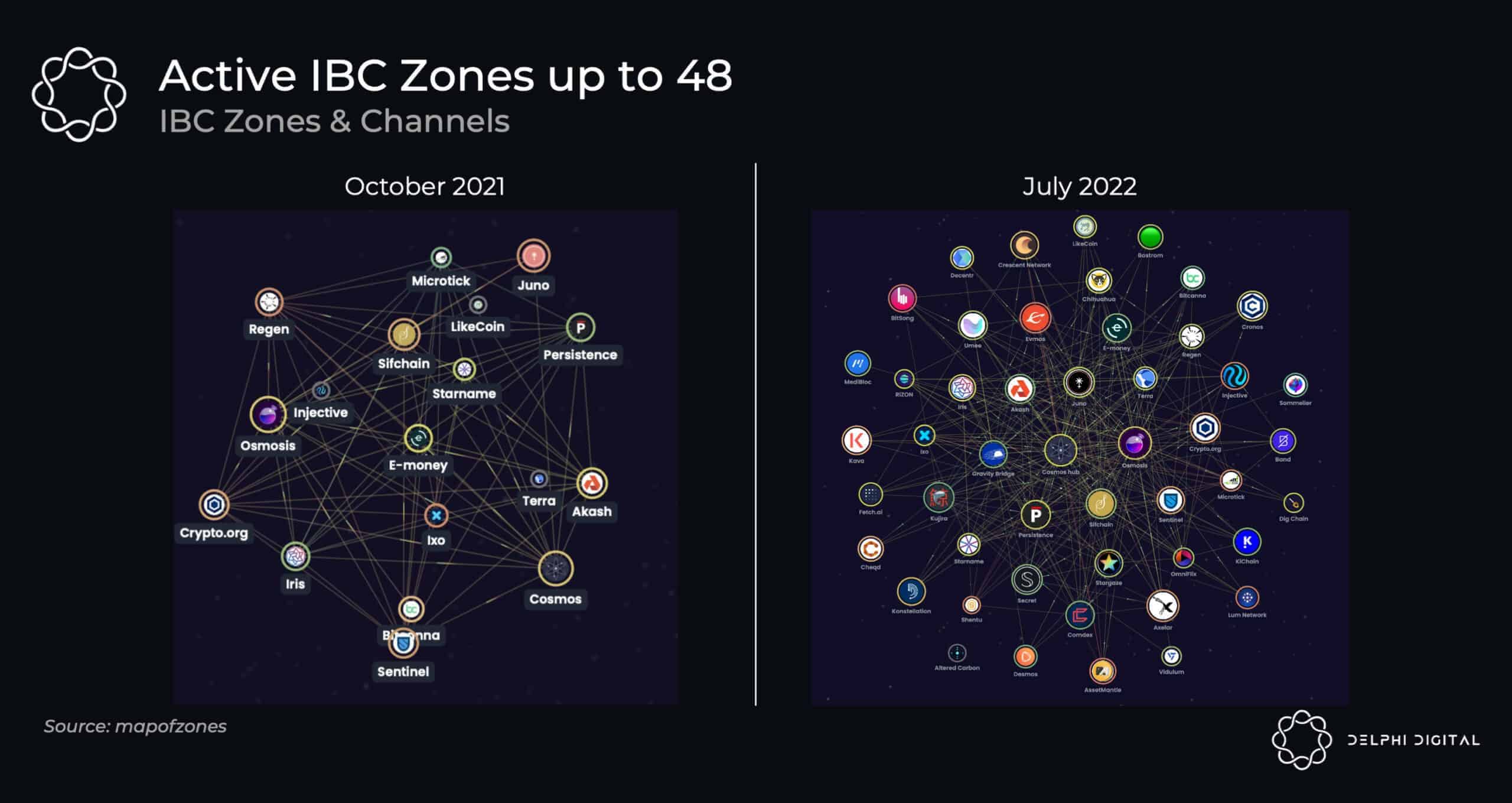
This technical breakthrough addresses the fragmentation that has long plagued the broader crypto landscape. By extending IBC to Solana and EVM chains, the Cosmos ecosystem is no longer an island. It becomes a hub within a larger interchain, where value and data can flow freely between diverse consensus mechanisms. This expansion is critical for the long-term viability of the interchain, as it allows Cosmos-based applications to access the liquidity and user bases of the world's most active networks.
The implementation of these light clients requires significant engineering effort. It involves developing custom verification logic for Solana's runtime and Ethereum's EVM state roots. However, the payoff is a more robust and scalable interchain. As these connections mature, developers will be able to build applications that leverage the strengths of multiple chains, such as the high throughput of Solana and the composability of Ethereum, all while maintaining the sovereignty and security guarantees of the Cosmos SDK.
Institutional Tokenization Use Cases
Major financial institutions are increasingly turning to the Cosmos stack to manage tokenized real-world assets. The Inter-Blockchain Communication (IBC) protocol offers a distinct advantage over traditional legacy systems by enabling direct, trust-minimized transfers between sovereign blockchains. This architecture allows banks and asset managers to settle trades across different ledgers without relying on centralized clearinghouses.
The primary driver for this adoption is the reduction in operational friction. Traditional cross-border settlements often involve multiple intermediaries, leading to delays and higher costs. By leveraging IBC, institutions can achieve near-instant settlement finality. This speed is critical for high-frequency trading and liquidity management, where time-sensitive decisions impact profitability.
To understand the scale of this shift, it helps to compare the mechanics of legacy systems against the Cosmos interchain model. The following table illustrates the operational differences in settlement times and cost structures for tokenized assets.
| Metric | Traditional Legacy Systems | Cosmos IBC Tokenization |
|---|---|---|
| Settlement Time | T+2 to T+3 days | Seconds to minutes |
| Intermediaries | Multiple (clearing houses, custodians) | Direct peer-to-peer |
| Operational Cost | High (fees, reconciliation labor) | Low (network gas fees) |
| Liquidity Fragmentation | High (silos across platforms) | Unified across chains |
This efficiency gain is not just theoretical. As the Cosmos ecosystem expands, more institutional-grade chains are integrating IBC, creating a robust network for institutional tokenization. The ability to move assets seamlessly between these chains reduces the need for complex bridging solutions, enhancing security and reducing counterparty risk.
For institutions, the Cosmos stack provides the necessary infrastructure to scale tokenization efforts. By adopting IBC, they can participate in a broader interchain liquidity pool, accessing deeper markets and more efficient capital allocation. This shift represents a fundamental change in how financial assets are managed and transferred in a decentralized future.
Interchain Security and Shared Security
As the Cosmos ecosystem expands toward 2026, maintaining robust security standards across an increasing number of interconnected chains becomes a primary operational challenge. The Interchain Foundation plays a central role in this effort, overseeing protocol updates and ensuring that the Inter-Blockchain Communication (IBC) protocol remains the backbone of a secure, scalable network. Rather than relying on isolated security models, the ecosystem is shifting toward shared security mechanisms that allow new zones to inherit protection from established validators.
This transition addresses the "security trilemma" often faced by new blockchains: balancing decentralization, scalability, and security. By leveraging Interchain Security, smaller chains can lease security from larger, more established networks like Cosmos Hub. This model reduces the barrier to entry for new projects while ensuring they meet rigorous security benchmarks from day one, rather than starting with minimal validator sets that are vulnerable to attacks.
The technical architecture relies on the Cosmos Stack, which provides a modular framework for building sovereign yet interconnected Layer 1 blockchains. According to the Interchain Foundation, this approach utilizes IBC as the best-in-class protocol for cross-chain communication, enabling seamless data and asset transfers without compromising the integrity of individual ledgers. As new zones join the interchain, the collective security pool grows, creating a more resilient network effect that benefits all participants.
For investors and developers, this shift represents a move from fragmented security to a unified, interdependent ecosystem. The focus is no longer just on individual chain performance but on the overall health and security of the interchain. This collaborative model ensures that as the Cosmos network scales, it does so with a consistent standard of trust and reliability, critical for high-stakes financial applications and institutional adoption.
Multi-Chain DeFi Strategies for 2026
The 2026 IBC expansion transforms Cosmos from a network of isolated chains into a unified liquidity layer. For developers and users, this means capital no longer needs to sit idle on a single ledger. Instead, assets can flow dynamically to wherever yield or utility is highest across the interchain.
Liquidity providers should prioritize chains with deep IBC integration to minimize bridging friction. By routing assets through native IBC channels, you reduce counterparty risk and slippage. This approach leverages the protocol’s built-in security rather than relying on third-party bridges.
Developers can build cross-chain applications that access data and tokens from multiple zones simultaneously. This interoperability allows for complex financial instruments that were previously impossible on single-chain architectures. The result is a more resilient and efficient DeFi ecosystem.
Inter-Blockchain Communication Protocol Overview
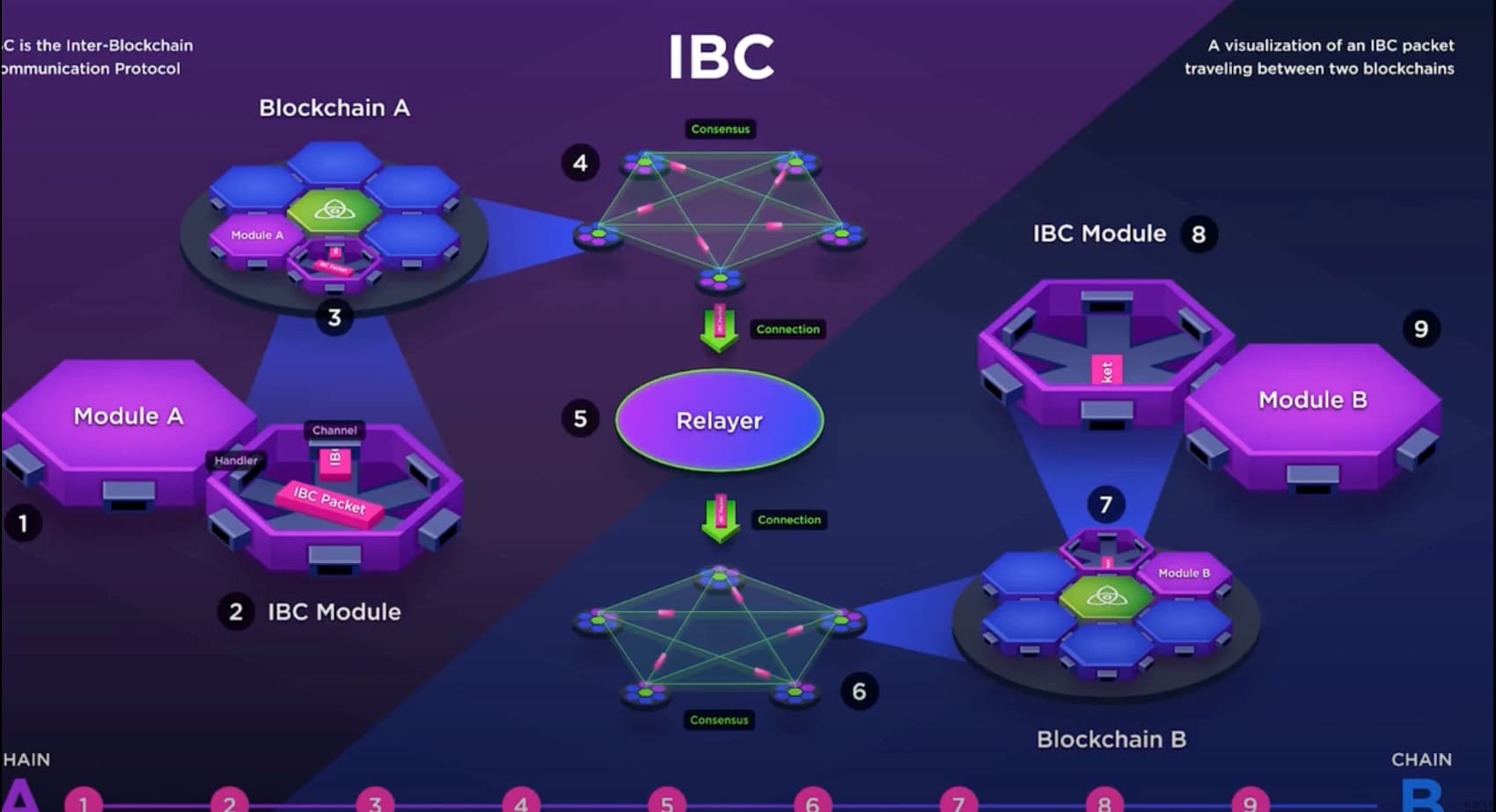
IBC stands for Inter-Blockchain Communication. It is the open-source protocol that allows independent blockchains to transfer data and tokens securely without a central intermediary. By standardizing how chains talk to each other, IBC enables the Cosmos ecosystem to function as a unified network of ledgers rather than isolated silos.
The protocol operates through a light-client verification system. Each chain maintains a lightweight client of the other, verifying proofs of state transitions. This ensures that assets moving between chains remain secure and that no double-spending occurs. The technical specifications and development standards are maintained in the official Cosmos IBC repository.
No comments yet. Be the first to share your thoughts!