
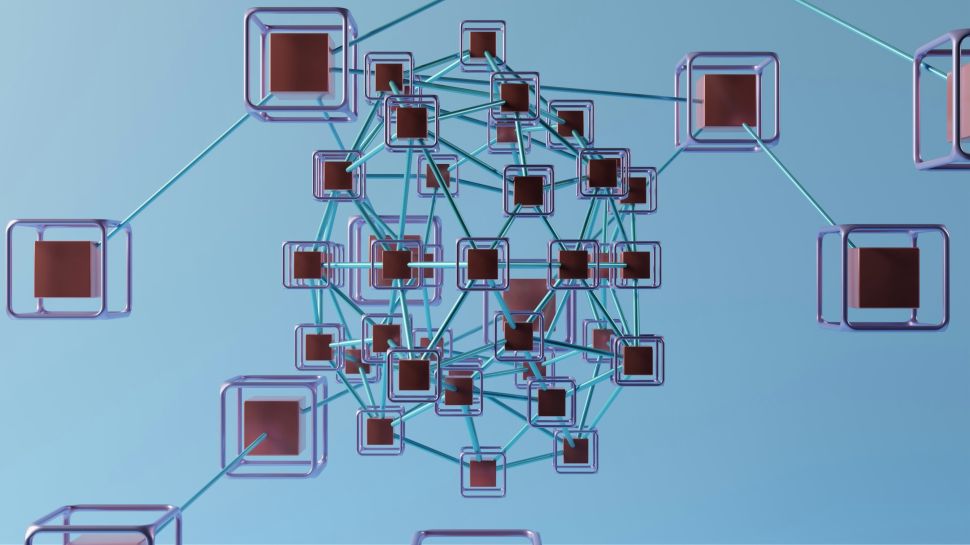
What Is IBC in Cosmos?
The Inter-Blockchain Communication (IBC) protocol is the foundational standard that allows independent blockchains to exchange data and value. Rather than relying on centralized exchanges or wrapped assets, IBC enables sovereign chains to talk to each other directly. This creates a network where each chain maintains its own security and governance while participating in a shared economy.
At its core, IBC is a byte-level data transfer protocol. Any application that can encode information into bytes can be transmitted across the network. This flexibility allows for a wide range of use cases, from simple token transfers and atomic swaps to complex multi-chain smart contracts. The protocol handles the heavy lifting of verification, ensuring that data arriving on a destination chain is authentic without needing to trust a central intermediary.
The technical baseline for this communication involves a handshake process. Before two chains can exchange information, they establish a connection and create channels. This process ensures that both parties agree on the state of the other chain. Once the connection is active, relayers—independent third-party nodes—observe the source chain, verify the proofs, and submit them to the destination chain. This mechanism is trust-minimized because the security relies on the cryptographic proofs and the economic stakes of the relayers, not on a central authority.
For the Cosmos ecosystem in 2026, IBC remains the primary interoperability layer. It allows the Cosmos Hub and its surrounding zones to function as a unified network of sovereign blockchains. By standardizing how chains communicate, IBC reduces fragmentation and enables liquidity and data to flow freely between diverse networks, from DeFi platforms to modular data availability layers.
IBC 2026 Architecture Updates
The Inter-Blockchain Communication Protocol has moved beyond its original boundaries. In 2026, IBC is no longer confined to the Cosmos ecosystem. It now serves as a general-purpose interoperability layer, connecting over 200 public networks. This expansion includes Ethereum L2s, Solana, and various rollups, marking a fundamental shift from a closed ecosystem to an open, universal standard.
New Light Client Support
The technical backbone of this expansion is the introduction of new IBC light clients. Previously, IBC relied on light clients that were largely designed for Tendermint-based chains. The 2026 updates introduce specialized light clients for non-Tendermint consensus mechanisms. These clients allow IBC relayers to verify state transitions on chains like Solana and EVM-compatible networks without requiring full node infrastructure.
This architectural change enables secure cross-chain communication between fundamentally different blockchain architectures. By verifying proof of consensus and state root changes, IBC can now trustlessly bridge assets and data across heterogeneous networks. This capability transforms IBC from a Cosmos-specific protocol into a universal interop layer.
Expanded Network Reach
The network effect of IBC 2026 is significant. By connecting to Solana and EVM L2s, the protocol taps into vast liquidity pools and developer communities previously inaccessible to Cosmos chains. This connectivity allows assets to flow freely between the Cosmos ecosystem and the broader multi-chain landscape.
The Interchain Foundation describes this evolution as the maturation of the Cosmos Stack into a scalable, secure, and interconnected architecture. The goal is not to replace existing ecosystems but to interconnect them seamlessly. This approach positions IBC as the standard for cross-chain interaction, enabling developers to build applications that leverage the unique features of multiple blockchains simultaneously.
Cross-Chain DeFi Applications
Cosmos IBC 2026 moves beyond simple token transfers to enable complex DeFi primitives. The protocol allows sovereign blockchains to share any type of data encoded in bytes, creating an environment where applications can operate across multiple chains simultaneously.
Atomic Swaps and Multi-Chain Contracts
IBC facilitates atomic swaps, ensuring that exchanges between different chains happen all at once or not at all. This eliminates the counterparty risk found in traditional bridges. Developers can build multi-chain smart contracts that execute logic across independent validators, relying on IBC-go for secure communication.
Unified Liquidity Pools
Protocols like Osmosis leverage IBC to aggregate liquidity from various sovereign networks. Instead of fragmented pools, traders access a unified depth of assets. This architecture allows chains to remain independent while sharing the economic benefits of a larger ecosystem.

Seamless Asset Composition
Assets from different chains can be composed into complex strategies without wrapping or centralized custodians. This composability means a user on one chain can interact with a lending protocol on another as if it were native. The result is a truly interconnected financial layer where value flows freely.
Source: IBC-Go Documentation
Real-World Asset Tokenization
The Inter-Blockchain Communication Protocol (IBC) has evolved beyond simple crypto-to-crypto transfers to become the primary highway for tokenized real-world assets (RWAs). By treating stablecoins and asset-backed tokens as first-class citizens within the IBC ecosystem, Cosmos provides a secure, sovereign environment for moving value across heterogeneous chains without relying on fragile bridge contracts.
This capability is anchored by specialized chains like Noble, which serves as the native asset issuance hub for the Cosmos ecosystem. Noble was designed specifically to handle the regulatory and technical requirements of issuing assets such as USDC and Ondo USDY (USDY). These assets are minted on Noble and then sent across IBC to other blockchains, including Osmosis and Celestia, where they can be traded or utilized in decentralized finance applications.
The security model here is distinct from traditional cross-chain bridges. Instead of locking funds in a smart contract on a destination chain and trusting a multisig or validator set, IBC uses light client verification. This means the receiving chain cryptographically verifies the state of the sending chain. For RWAs, this eliminates the single point of failure often associated with bridge hacks, ensuring that the tokenized assets maintain their integrity and value as they traverse the network.
As the Cosmos ecosystem shifts toward a revenue-based model in 2026, the demand for efficient RWA settlement grows. IBC allows these assets to remain liquid and usable across multiple chains, fostering a unified liquidity layer that supports both institutional adoption and decentralized innovation.
Key Projects Building on IBC
The Cosmos SDK ecosystem has grown into a diverse network of specialized chains. Rather than a single monolithic platform, developers now choose from distinct chains that use IBC to exchange assets and data. This modularity allows each project to optimize for specific needs—whether that is high-throughput trading, institutional asset issuance, or decentralized storage.
Osmosis
Osmosis serves as the primary liquidity hub for the Cosmos IBC network. As a decentralized exchange, it enables sovereign chains to access deep liquidity pools without building their own market infrastructure. Users can swap tokens across dozens of connected chains, making it the largest DEX in the ecosystem.
Celestia
Celestia addresses the data availability bottleneck that affects many high-performance blockchains. By acting as a modular data layer, it allows application-specific blockchains to publish their transaction data securely. This separation of execution and data availability is a core use case for IBC-enabled interoperability.
Noble
Noble focuses on native asset issuance for the IBC ecosystem. It provides a dedicated chain for issuing stablecoins like USDC and USDN with minimal latency and low fees. Financial applications built on other Cosmos chains can pull these assets directly via IBC, streamlining cross-chain payments.
Mantra
Mantra is a Layer 1 blockchain built specifically for Real World Assets (RWA). It combines IBC connectivity with regulatory compliance features. This allows institutional players to tokenize physical assets and move them across the Cosmos network while adhering to specific jurisdictional requirements.
These projects illustrate how IBC supports a multi-chain future. Instead of forcing all applications onto one chain, developers can compose specialized networks that talk to each other. This architecture reduces congestion and allows each chain to innovate independently while remaining part of a unified network.
Common Questions About IBC
The Inter-Blockchain Communication Protocol (IBC) functions as the underlying transport layer for the Cosmos ecosystem, enabling distinct blockchains to exchange data and tokens securely. Below are answers to frequent technical queries regarding IBC functionality and the projects leveraging this interoperability standard.
No comments yet. Be the first to share your thoughts!