
IBC connects 200 public networks
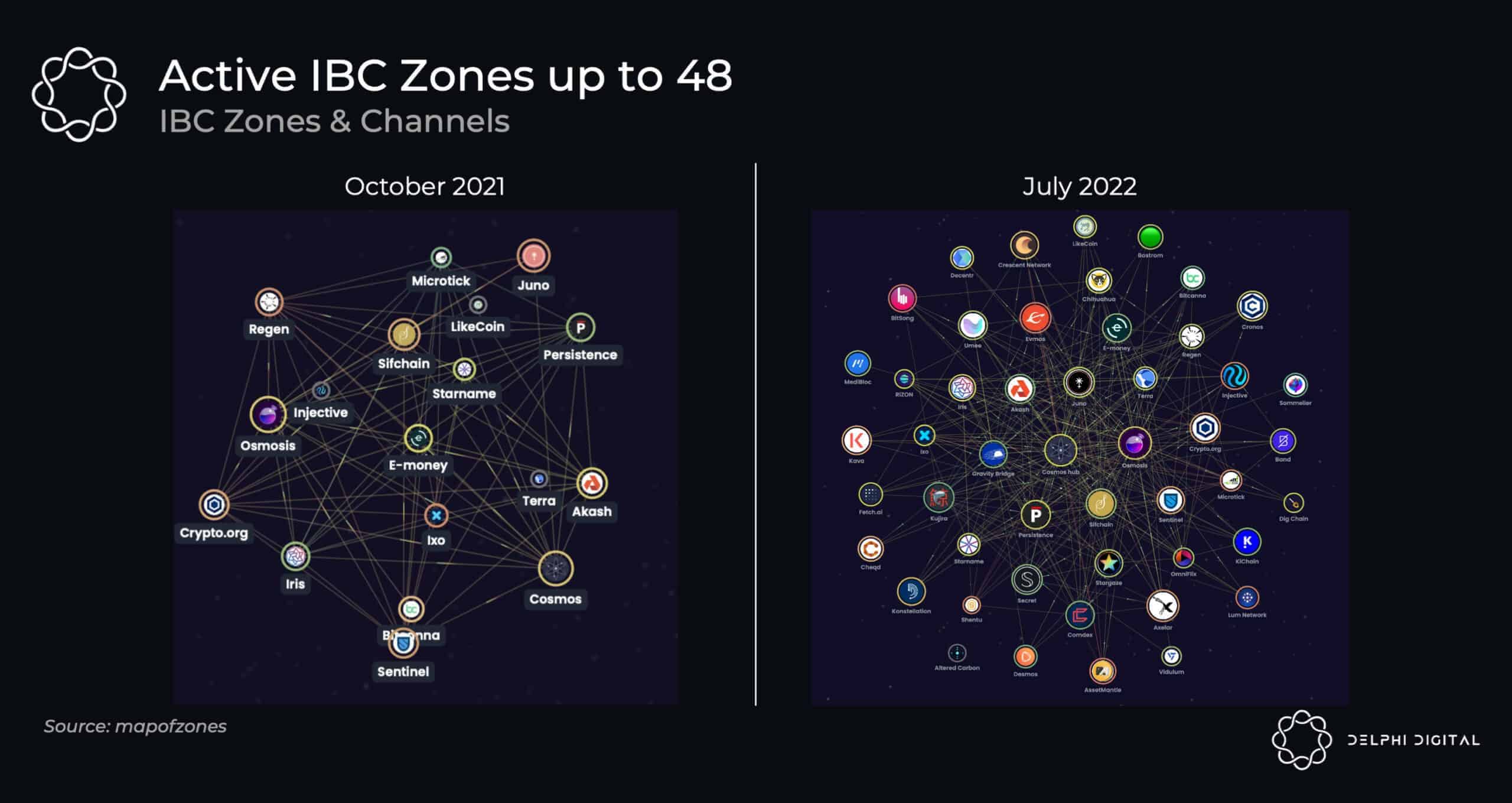
The Cosmos IBC (Inter-Blockchain Communication) protocol has scaled from a niche hub-and-spoke experiment into a broad, interconnected graph. In 2026, IBC connects 200 public networks, transforming how blockchains interact across the digital economy.
This shift marks a departure from isolated silos. Instead of relying on centralized bridges or risky wrapped assets, chains now speak a common language. The protocol enables direct, trust-minimized communication between sovereign networks, allowing assets and data to flow freely across the ecosystem.
The expansion continues aggressively. As noted by the Cosmos team, IBC now supports connections to Solana, EVM L2s, rollups, and any other chain equipped with new IBC light clients. This interoperability layer is no longer just for Cosmos-based chains; it is becoming the standard for cross-chain interaction.

IBC Eureka launches native cross-chain apps
The fragmentation crisis in blockchain has long forced developers to build complex, error-prone bridges to connect different networks. IBC Eureka, launched in April 2026, changes this by allowing applications to run natively across multiple chains without those intermediate layers. This breakthrough eliminates the primary attack surface that has historically plagued cross-chain interactions.
With IBC Eureka, a single application interface can now interact with multiple chain nodes simultaneously. This architecture means that data and state are verified directly between the source and destination chains, rather than relying on third-party validators or wrapped assets. The result is a more secure and efficient environment for decentralized applications.
This native approach is already showing significant traction. As of 2026, IBC is live across 115+ networks, leading Polkadot in real-world cross-chain transaction volume. The protocol, maintained as the canonical standard on GitHub, has evolved from a simple packet relay system into a robust foundation for interoperable software.
By removing the need for complex bridging, IBC Eureka allows developers to focus on building better user experiences rather than securing fragile connection points. This shift marks a significant step toward a truly interconnected blockchain ecosystem, where liquidity and data flow freely without compromising security.
Interchain security upgrades for hubs
Interchain Security (ICS) allows smaller chains to lease security from major hubs like Cosmos Hub. This shared security model enhances network stability and trust by pooling validator resources across the ecosystem. Instead of each new chain recruiting its own set of validators, it can tap into the established security budget of a large hub.
The traditional model requires new projects to build their own validator sets from scratch, a process that is both time-consuming and resource-intensive. ICS simplifies this by allowing consumer chains to connect to a provider chain. The provider’s validators secure both the hub and the connected chains, reducing the barrier to entry for new projects while maintaining high security standards.
The table below compares traditional solo staking with the ICS shared security model across key operational metrics.
| Metric | Traditional Solo Staking | ICS Shared Security |
|---|---|---|
| Validator Recruitment | Must recruit and onboard independently | Leases from existing hub validators |
| Security Budget | Limited to chain’s own staked value | Backed by hub’s total staked value |
| Time to Launch | Months to build trust and set | Weeks to integrate with hub |
| Validator Overhead | High; full infrastructure required | Low; shared infrastructure model |
This approach creates a hub-and-spoke structure where major hubs act as security providers. As noted in the Cosmos Stack Roadmap for 2026, this modularity is central to improving performance and enterprise functionality. By leveraging the security of established hubs, new chains can focus on their unique utility rather than reinventing security infrastructure.
Multi-chain liquidity and enterprise tools
The Cosmos ecosystem is shifting from experimental interoperability to institutional-grade infrastructure. The 2026 roadmap prioritizes features that address traditional finance requirements, specifically native Proof of Authority (PoA) consensus and enhanced privacy mechanisms. These additions allow chains to operate with the determinism and compliance standards expected by enterprises, moving beyond the speculative volatility that has historically defined the space.
For financial institutions, the primary value lies in controlled execution. Native PoA enables high-throughput transaction processing with predictable finality, a stark contrast to the probabilistic finality of standard Proof of Stake models. This capability is essential for settlement layers and private sidechains that handle sensitive data or require regulatory adherence. By embedding these features directly into the Cosmos SDK, developers can deploy compliant chains without relying on external, fragile bridges.
Liquidity fragmentation remains a persistent challenge in multi-chain environments, but the IBC protocol continues to mature as a solution. Instead of forcing all assets onto a single congested chain, Cosmos allows liquidity to remain native to the chain where it is most efficiently utilized. This approach reduces gas wars and cross-chain slippage, making inter-chain transactions more predictable for high-volume traders and institutional custodians.
The economic implications are significant. As enterprise adoption grows, the demand for stable, high-performance chains increases. While ATOM price predictions for 2026 vary widely, ranging from conservative estimates of $35 to optimistic scenarios exceeding $120, the underlying utility is becoming more tangible. The focus is no longer just on token speculation but on the actual volume of value moving across the Cosmos Hub and its connected zones.
For enterprise tools, privacy is no longer optional. New privacy features allow for confidential transactions and data obfuscation, ensuring that sensitive business logic remains hidden from public view while still benefiting from IBC interoperability. This balance between transparency and confidentiality is what will ultimately determine whether Cosmos can capture a meaningful share of the institutional market. The technology is ready; the question is whether enterprises will trust it with their core operations.
Cosmos vs Polkadot in 2026
The choice between Cosmos and Polkadot in 2026 comes down to a fundamental trade-off: the breadth of connectivity versus the depth of shared security. Cosmos has expanded its Inter-Blockchain Communication (IBC) protocol to connect over 115 networks, making it the leader in real-world cross-chain transaction volume. Polkadot, conversely, relies on a shared security model where parachains are secured by a central relay chain, offering a more unified but less flexible ecosystem.
The table below breaks down the technical and operational differences that define each platform's approach to interoperability.
| Feature | Cosmos | Polkadot |
|---|---|---|
| Connectivity Model | Hub-and-Spoke (IBC) | Parachain Relay Chain |
| Security | Independent (Self-secured) | Shared (Relay Chain) |
| Network Count (2026) | 115+ networks | ~50 parachains |
| Interoperability Protocol | IBC | XCMP (Cross-Chain Message Passing) |
| Governance | Per-zone (e.g., Cosmos Hub) | Centralized Relay Chain |
Cosmos’s IBC Eureka upgrade in April 2026 further streamlined this hub-and-spoke structure, allowing zones to connect directly without routing through a central hub. This flexibility appeals to developers building sovereign chains that need to talk to many different networks. Polkadot’s model is tighter; parachains share security, which reduces the risk of individual chain failures but limits the types of chains that can join the ecosystem. For projects prioritizing maximum connectivity and sovereignty, Cosmos is the stronger fit. For those needing a secure, standardized environment with shared resources, Polkadot remains a compelling option.
Cosmos IBC 2026 FAQ
What is IBC Eureka?
IBC Eureka is the 2026 evolution of the Inter-Blockchain Communication protocol, designed to make connecting chains as simple as plugging in a USB drive. Instead of complex custom bridges, Eureka introduces a standardized "chain of chains" architecture. This allows new blockchains to launch with built-in interoperability, sharing security and liquidity with the wider Cosmos ecosystem out of the box.
How does Interchain Security work?
Interchain Security lets a central hub chain, like Cosmos Hub, lease its staking security to other chains. This means smaller chains don't need to build their own validator sets from scratch; they borrow the economic security of the main network. This model reduces the risk of attacks on new chains while allowing the hub to earn additional staking rewards.
Is ATOM a good investment in 2026?
Price forecasts for ATOM in 2026 vary significantly based on market conditions. Conservative estimates place the price between $35 and $50, while base scenarios suggest $50–$80, and optimistic projections reach up to $120. These figures depend heavily on the successful adoption of IBC Eureka and broader crypto market trends.
What is the 2026 Cosmos roadmap focused on?
The 2026 roadmap prioritizes performance, modularity, and enterprise features. Key updates include native Proof of Authority mechanisms for permissioned chains and enhanced privacy tools. The goal is to make the Cosmos stack more attractive to institutional users who require specific compliance and speed guarantees.
No comments yet. Be the first to share your thoughts!