
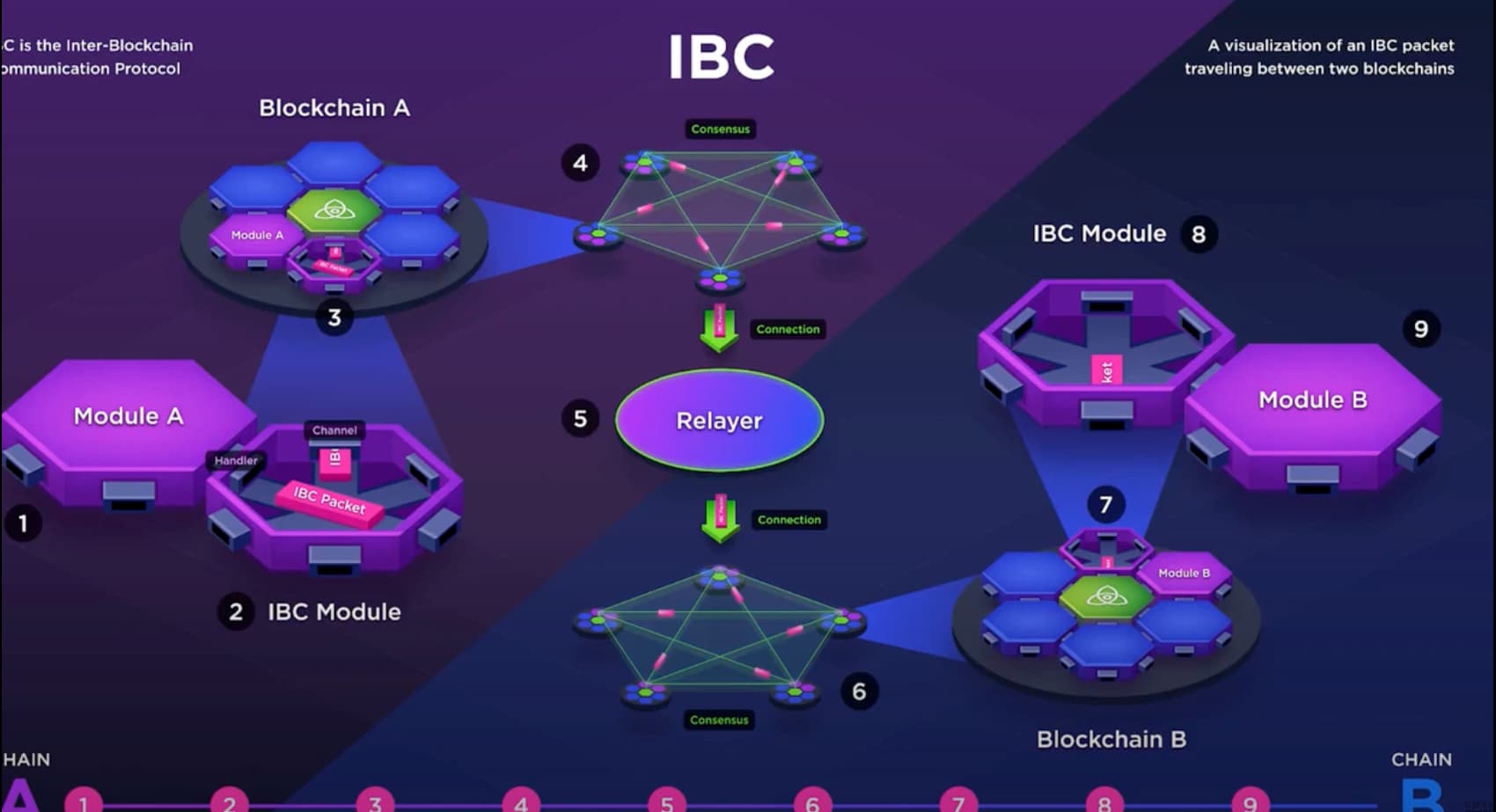
What IBC 3.0 changes for developers
Cosmos IBC 3.0 introduces significant structural upgrades to the Inter-Blockchain Communication protocol, moving beyond simple packet forwarding to support more complex, stateful interactions. For developers building cross-chain applications, these changes reduce the friction of managing multiple chains and enable new patterns of interoperability that were previously difficult to implement.
The core of this update lies in the introduction of enhanced client flexibility and improved packet lifecycle management. IBC 3.0 refines how light clients verify state across different consensus mechanisms, allowing chains to trust each other with less overhead. This means developers can integrate a wider variety of consensus models without writing custom verification logic for every new chain they connect to.
Another major shift is the support for unordered packet delivery and better error handling. In earlier versions, strict ordering was required for all packets, which could create bottlenecks and complicate application logic. IBC 3.0 allows applications to opt into unordered delivery where appropriate, improving throughput and simplifying the codebase for high-frequency interactions. Combined with more granular timeout and error callbacks, developers gain finer control over transaction reliability.
These technical adjustments mean that building multi-chain dApps is no longer a matter of stitching together fragile bridges. Instead, Cosmos IBC 3.0 provides a more robust foundation for composable finance, shared security models, and unified user experiences across the Cosmos ecosystem.
Cross-chain asset transfers made easier
Cosmos IBC 3.0 refines the mechanics of moving assets between chains, significantly reducing the friction that has historically complicated cross-chain interactions. In previous iterations, users often faced a maze of wrapped tokens, complex bridge contracts, and opaque routing layers that increased both cost and risk. The updated protocol standardizes these pathways, creating a more predictable environment for value exchange.
The core improvement lies in the simplification of the transportation layer. By streamlining authentication and ordering, Cosmos IBC 3.0 ensures that token transfers are processed with greater reliability and lower latency. This means that when a user initiates a transfer from one chain to another, the underlying infrastructure handles the heavy lifting with less manual intervention. The result is a smoother experience where the technical complexities of inter-chain communication are abstracted away from the end-user.
This reduction in friction is particularly evident in how Cosmos IBC 3.0 handles ERC20 tokens. The protocol now enables a more direct flow of assets between Ethereum and the Cosmos Hub, allowing decentralized applications to interact with a wider variety of assets without requiring complex wrapping mechanisms. This directness not only speeds up transactions but also reduces the attack surface associated with third-party bridge contracts.
For non-technical users, the impact is tangible. The interface for moving assets becomes more intuitive, as the system handles the validation and routing in the background. This shift moves the focus from troubleshooting failed transfers to simply executing the desired transaction. As the ecosystem matures, this streamlined approach to asset movement will likely become the standard for interoperability, making multi-chain portfolios easier to manage.
Multi-chain DeFi opportunities in 2026
IBC 3.0 transforms the Cosmos ecosystem from a collection of isolated blockchains into a unified financial layer. For DeFi builders and users, this means capital no longer needs to be trapped on a single chain. The protocol’s enhanced packet verification and reduced latency allow smart contracts to interact with assets and liquidity pools across different zones in real time.
Cross-chain lending is one of the most immediate applications. Lenders can now supply assets like ATOM or TIA to a lending protocol on one chain while using borrowed stablecoins on another chain for trading or yield farming. IBC 3.0 ensures that the collateral remains secure and verifiable across the communication layer, reducing the need for complex, high-risk wrapped token solutions.
Liquidity aggregation also sees a major upgrade. Instead of relying on centralized exchanges or fragmented decentralized pools, IBC 3.0 enables atomic swaps and unified order books across chains. A user on Osmosis can trade directly against liquidity on Juno or Celestia without bridging assets manually. This consolidation deepens liquidity, reduces slippage, and simplifies the user experience.
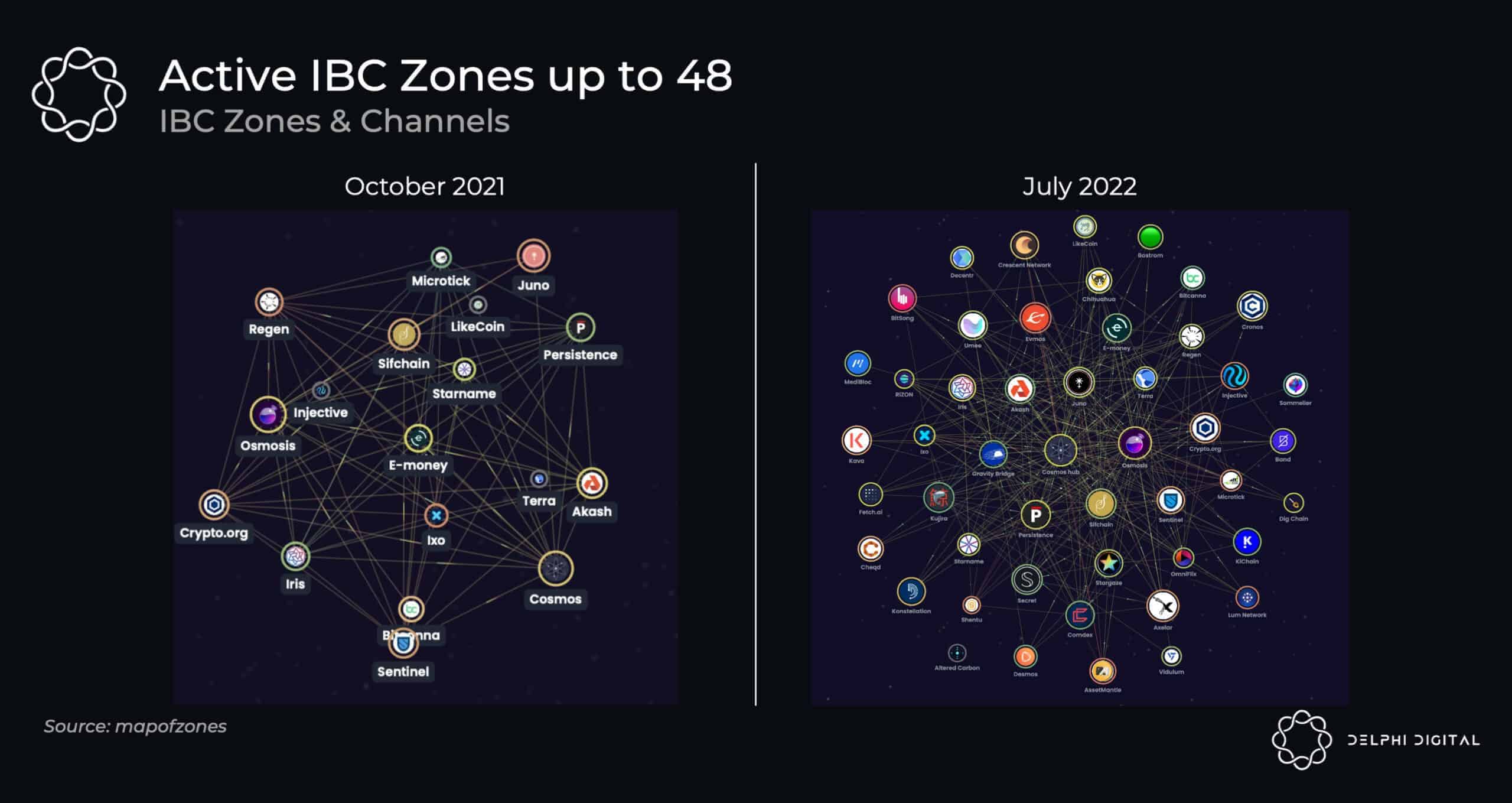
The visual evolution of this connectivity is evident in the architectural diagrams of the Cosmos network. The following image illustrates how IBC facilitates this inter-chain communication, showing the direct links between zones rather than hub-and-spoke dependencies.
Community perspectives on IBC adoption
The rollout of Cosmos IBC 3.0 has sparked active discussion among developers and users who rely on the Inter-Blockchain Communication protocol. The core sentiment centers on how these updates simplify trustless asset transfers while maintaining the modular architecture that defines the Cosmos ecosystem.
"IBC is protocol native to Cosmos ecosystem. It is used as a trustless bridge that is used for assets transfer between chains."
This foundational understanding remains unchanged, but the technical refinements in version 3.0 address previous friction points. Developers are particularly focused on improved efficiency and reduced latency when moving data across heterogeneous chains.
Developer feedback and community sentiment
On platforms like r/CryptoCurrency, discussions highlight the practical utility of these upgrades. Users appreciate the enhanced reliability of the bridge mechanisms, which are critical for maintaining liquidity across the Cosmos zone.
The community views Cosmos IBC 3.0 not as a complete reinvention, but as a necessary maturation of the protocol. By streamlining the communication layers, the update ensures that the ecosystem can scale without compromising the security guarantees that early adopters value.
Frequently asked questions about Cosmos IBC 3.0
Is Cosmos IBC 3.0 backward compatible with existing chains?
Cosmos IBC 3.0 is designed to maintain backward compatibility with chains running older IBC versions. Existing relayers and clients can continue operating without immediate disruption. However, to access new features like improved light client efficiency or enhanced security modules, chains must upgrade their core software. This allows the ecosystem to evolve without forcing a hard fork or breaking established interchain connections.
How does IBC 3.0 improve security for light clients?
IBC 3.0 introduces updates to the light client protocol, reducing the computational overhead required to verify cross-chain transactions. By optimizing the consensus state verification process, chains can trust data from other networks more efficiently. This reduction in resource usage makes it easier for smaller chains to integrate with the Cosmos ecosystem, lowering the barrier to entry for new projects.
What migration steps are required for validators?
Validators do not need to take special action until their chain decides to upgrade. The migration path is governed by the chain’s on-chain governance proposals. Once a proposal to upgrade to IBC 3.0 passes and the upgrade height is reached, validators must simply update their node software to the new version. After the upgrade block, the node will automatically handle the new IBC message types and light client logic.
No comments yet. Be the first to share your thoughts!