
What is Cosmos IBC?
Cosmos IBC (Inter-Blockchain Communication) is a protocol that allows separate blockchains to send tokens and data to one another directly, without relying on centralized intermediaries. It functions as a standard for byte-level data exchange, enabling independent chains to communicate regardless of their underlying consensus mechanisms or virtual machines.
Think of IBC as a universal shipping container for digital assets. Before IBC, moving assets between chains often required wrapping them in complex bridge contracts or trusting a centralized custodian to hold the funds. IBC removes that friction by establishing a secure, trust-minimized channel between two sovereign networks. When Chain A sends a packet to Chain B, the protocol verifies the packet's authenticity and integrity before releasing the corresponding assets on the destination chain.
This capability extends beyond simple token transfers. IBC enables atomic swaps, cross-chain governance, and complex multi-chain logic. Because the protocol operates at the network layer, it is agnostic to the specific application logic running on top of each chain. This means a DeFi application built on Cosmos can natively interact with a gaming chain or a data storage network, provided both support the IBC standard.
The result is a more connected blockchain ecosystem where liquidity and data can flow freely. Instead of isolated silos, chains become nodes in a larger, interoperable network. This foundational layer is what allows the Cosmos ecosystem to function as an "Internet of Blockchains," offering a more robust and secure alternative to traditional cross-chain bridges.
The 2026 Expansion Landscape
By 2026, the Cosmos ecosystem has fundamentally shifted from an internal silo of independent zones to a central hub for cross-chain interoperability. The Inter-Blockchain Communication (IBC) protocol now connects over 200 public networks, creating a dense mesh of liquidity and data flow that extends far beyond the original Cosmos SDK ecosystem.
This expansion marks a decisive move toward external connectivity. While early IBC adoption focused on linking chains built with Cosmos SDK tools, the current landscape integrates diverse architectures, including EVM L2s, Solana, and various rollups. This is achieved through new IBC light clients, which allow Cosmos chains to securely verify and communicate with external consensus mechanisms without relying on centralized bridging infrastructure.
The result is a more resilient DeFi environment. Instead of fragmented liquidity pools isolated within single chains, assets and data can move freely between the 200+ connected networks. This native interoperability reduces counterparty risk and transaction friction, making IBC the standard for secure cross-chain interaction rather than an afterthought.
New IBC Light Clients
The Inter-Blockchain Communication Protocol (IBC) has historically been limited to the Cosmos ecosystem, relying on a network of trusted relayers to pass messages between chains. This model works well for chains built on Tendermint consensus, but it creates a barrier for connecting to the broader blockchain landscape, including Solana and Ethereum Layer 2s. The 2026 update introduces a fundamental shift: IBC light clients.
An IBC light client is a smart contract deployed on a destination chain that verifies the state of a source chain independently. Instead of trusting a third-party relayer to report that a transaction occurred, the destination chain runs a lightweight verification algorithm. It checks cryptographic proofs against the source chain's header data to confirm the transaction is valid. This removes the need for trusted intermediaries, significantly reducing the attack surface and trust assumptions associated with traditional bridges.
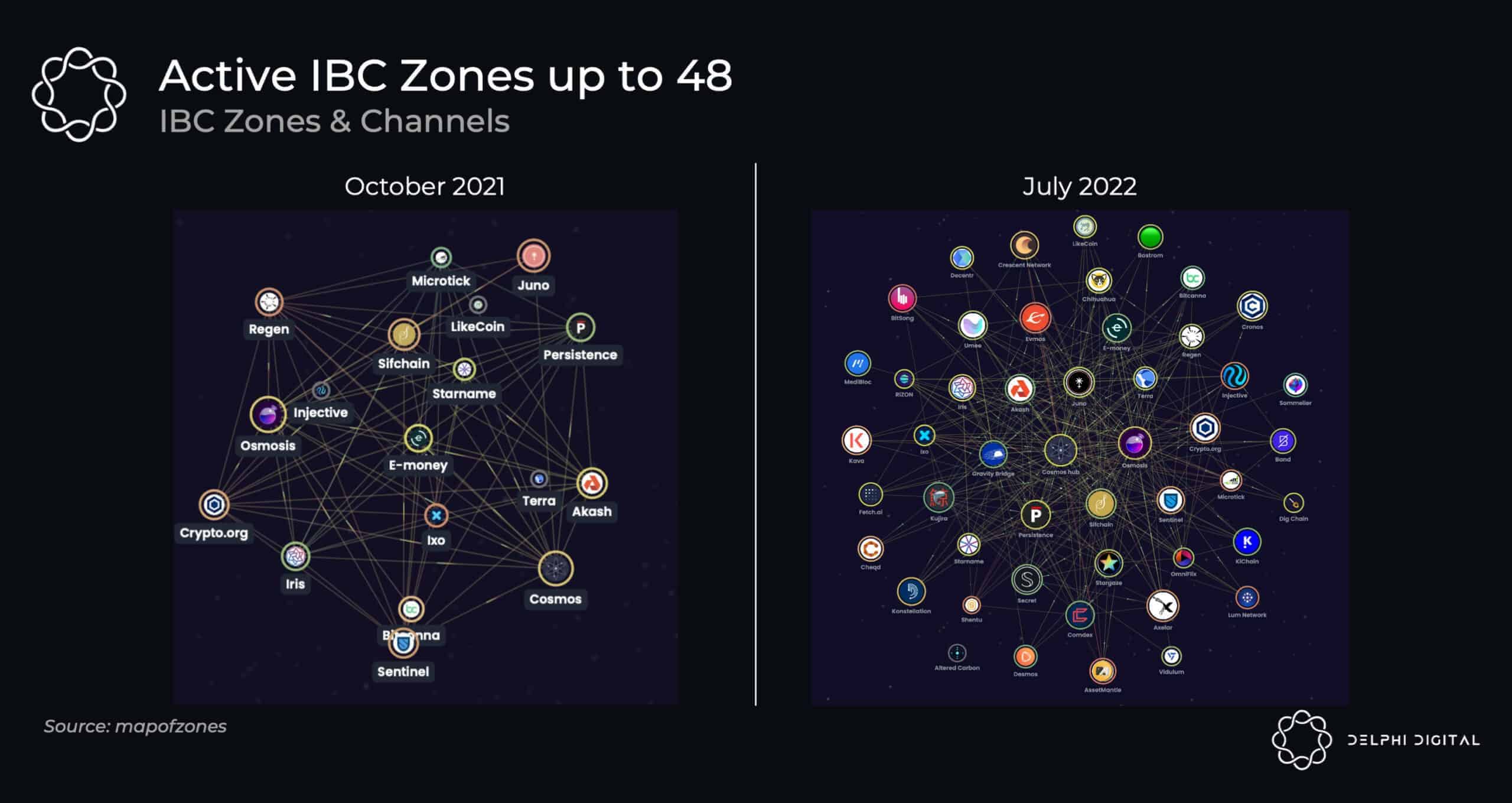
This technical upgrade allows IBC to connect to non-Cosmos chains like Solana and EVM L2s. By deploying these light clients, any chain that can verify Merkle proofs can join the IBC network. This means a user on an Ethereum L2 can send assets to a Solana dApp using the same native IBC interface they would use for a Cosmos chain, without wrapping tokens in a custodial bridge.
The result is a more open interoperability layer. As Cosmos IBC expands in 2026, it aims to connect over 200 public networks, including rollups and diverse consensus mechanisms. This approach treats interoperability as a standard protocol feature rather than a specialized bridge service, enabling cross-chain DeFi to scale with the same security guarantees as the underlying chains.
Cross-Chain DeFi Trends
Developers are moving beyond simple token bridging to build complex, interconnected financial systems using IBC. This shift enables atomic swaps, cross-chain logic, and unified liquidity pools that operate across independent blockchains. Instead of relying on centralized intermediaries, these applications leverage native IBC advantages to create seamless user experiences.
Atomic Swaps and Instant Settlement
Atomic swaps allow users to exchange assets between different chains without trusting a third party. The protocol ensures that either both sides of the trade complete successfully or neither does, eliminating counterparty risk. This capability is foundational for decentralized exchanges and cross-chain lending protocols that require immediate, secure settlement.
Cross-Chain Logic
IBC supports complex logic that spans multiple networks. A single application can manage assets and state across different chains, enabling features like cross-chain margin trading or unified staking rewards. This interoperability reduces fragmentation and allows developers to build more sophisticated financial instruments without relying on fragile bridge contracts.
Unified Liquidity Pools
Unified liquidity pools aggregate capital from various chains into a single, accessible resource. Users can deposit assets from any IBC-enabled chain, increasing depth and reducing slippage for traders. This approach creates a more efficient market by connecting previously isolated liquidity silos, driving higher volumes and better prices for all participants.
Why enterprises prefer IBC for institutional adoption
Enterprise adoption of blockchain technology has historically stalled on the "interoperability problem." Legacy financial institutions require systems that are secure, compliant, and predictable. They cannot afford the security risks associated with third-party bridge contracts, which have become the primary target for cross-chain exploits. The Inter-Blockchain Communication (IBC) protocol solves this by providing a standardized, open-source protocol for independent blockchains to communicate.
Unlike traditional bridges that lock assets in smart contracts on a destination chain, IBC uses a light client verification system. This means the source chain verifies the state of the destination chain directly. For an enterprise, this architectural choice is critical. It eliminates the "trust assumption" required by bridges, ensuring that asset transfers are secured by the consensus of the participating chains rather than a centralized validator set or a complex smart contract logic.
The Cosmos Stack’s sovereign chain architecture further appeals to institutional needs. Enterprises can launch their own application-specific blockchains that adhere to strict regulatory requirements while still connecting to the broader interchain economy. This sovereignty allows banks or government entities to maintain control over their data and governance while leveraging the liquidity and utility of the wider network.
This model supports a "walled garden" approach to compliance. A regulated chain can connect to IBC but configure its IBC middleware to restrict which external chains it communicates with. This granular control over connectivity is something generic public blockchains cannot offer, making IBC the preferred layer for institutional-grade DeFi infrastructure.
No comments yet. Be the first to share your thoughts!