
Cosmos ibc in 2026: the limits to account for
By 2026, the Cosmos IBC protocol is no longer just a theoretical framework for an "Internet of Blockchains." It has become the primary infrastructure for cross-chain liquidity, but it faces a significant constraint: fragmentation. While IBC-Go enables seamless communication between independent blockchains, the ecosystem is split into distinct zones with varying levels of security and interoperability standards.
The primary challenge for multi-chain portfolios is not connectivity, but consistency. Unlike a single-chain environment where assets live in one ledger, IBC requires trust assumptions about the counterparty chain. If a hub or zone experiences a governance attack or technical failure, assets routed through it can be at risk. This means that "interoperability" in 2026 is not a binary state of being connected or disconnected; it is a spectrum of trust.
For portfolio managers, this constraint demands a new approach to asset allocation. You must evaluate each chain not just by its token price, but by its IBC maturity. This includes the robustness of its light client implementation, the security of its relayer network, and the liquidity depth of its IBC pools. The goal is to build a portfolio that leverages IBC's speed and low fees while mitigating the cross-chain risks inherent in a fragmented landscape.
Cosmos ibc 2026 choices that change the plan
Interoperability is no longer a theoretical promise; it is the operational backbone of the Cosmos ecosystem. However, moving assets and data between chains introduces specific friction points that portfolio managers must evaluate. The tradeoffs center on speed, security assumptions, and the reliability of the infrastructure that bridges these networks.
Latency vs. Finality
The most immediate tradeoff is between transaction speed and settlement certainty. IBC relies on light clients to verify headers from other chains. This process is fast but depends on the honesty of the validator set. If you are trading high-frequency assets, the delay in cross-chain finality can expose you to price slippage or arbitrage opportunities that vanish before your transaction confirms. Conversely, waiting for deep finality on the source chain means slower capital rotation. You must decide if your strategy prioritizes speed or absolute settlement security.
Relayer Risk and Decentralization
IBC does not move data automatically; it requires relayers—off-chain services that scan chains, build proofs, and submit transactions. While the IBC protocol itself is trustless, the relayer layer introduces a practical dependency. If you rely on a single, centralized relayer service for a specific channel, you introduce a single point of failure. A relayer outage can freeze liquidity. The tradeoff here is convenience versus decentralization. Using community-run relayers is safer but less reliable for critical, time-sensitive movements. Always check the health and decentralization of the relayer network before committing significant capital to a specific bridge.
Counterparty Chain Solvency
When you bridge assets via IBC, you are not just moving tokens; you are exposing your portfolio to the economic health of the destination chain. If the destination chain experiences a governance attack, a critical bug, or a liquidity crisis, your bridged assets are at risk, even if the source chain is secure. This is distinct from wrapped assets on centralized exchanges, where the custodian’s solvency is the primary risk. In IBC, you must evaluate the validator set size, economic security, and technical maturity of every chain in your portfolio. A diversified multi-chain portfolio requires diversifying your counterparty risk, not just your asset class.
| Factor | Speed | Security | Cost | Reliability |
|---|---|---|---|---|
| Native IBC Transfer | Medium (depends on light client speed) | High (trustless, protocol-level) | Low (gas on both ends) | High if relayers are healthy |
| Centralized Relayer | High (optimized paths) | Medium (trust in operator) | Medium (service fees) | Medium (single point of failure) |
| Wrapped Assets on CEX | High | Low (counterparty risk) | High (fees, spreads) | High (established infrastructure) |
| Cross-Chain DEX Aggregator | Low (complex routing) | Medium (smart contract risk) | High (slippage, multiple txs) | Variable (liquidity depth) |
Choose the next step
Building a multi-chain portfolio on Cosmos requires more than just holding ATOM. It demands a clear strategy for how assets move, who manages the risk, and which chains offer the best yield or utility. Use this framework to decide your next move, whether you are bridging stablecoins, seeking high-yield staking, or deploying cross-chain applications.
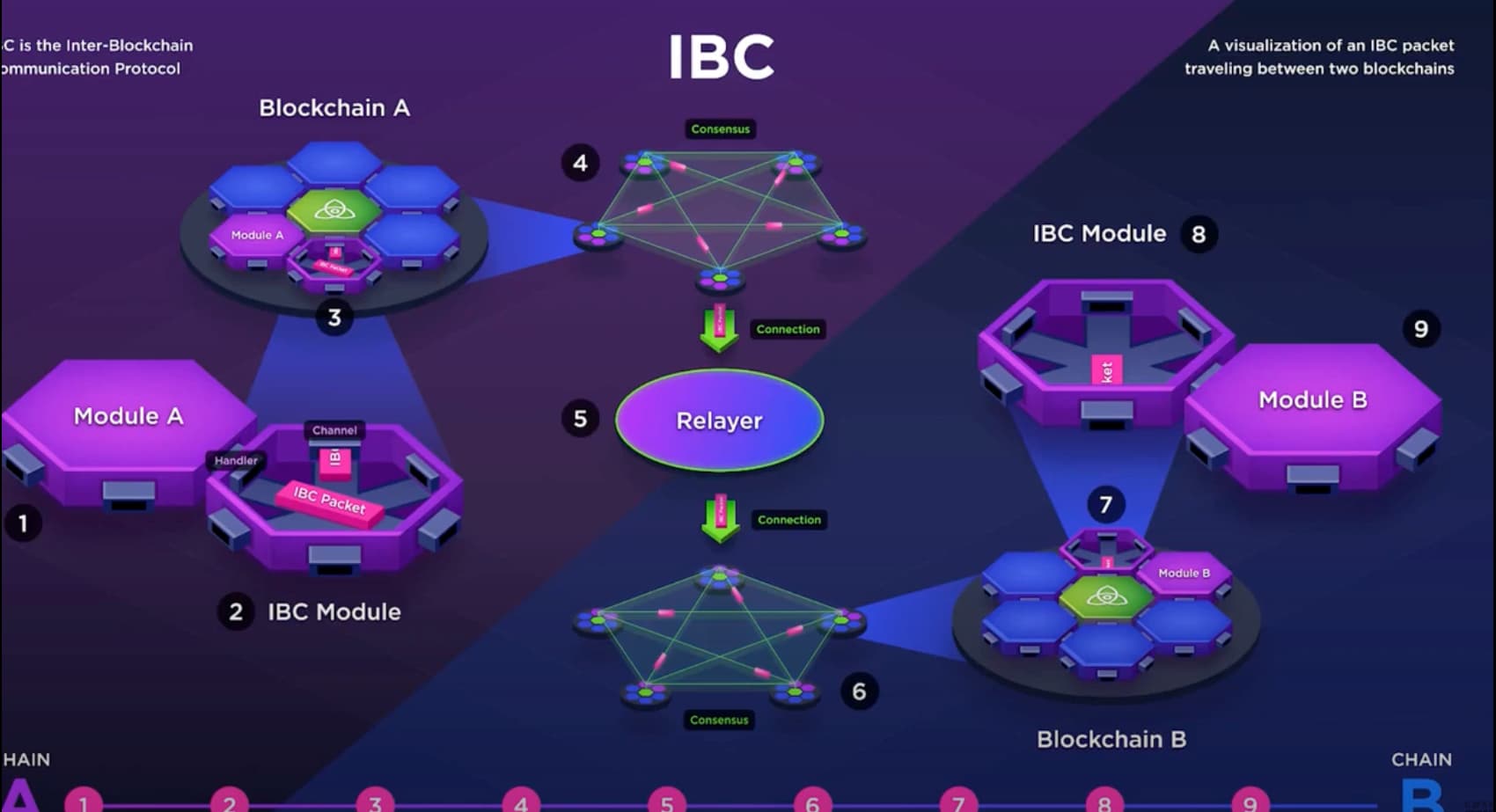
Start by defining how much risk you can handle. Cosmos IBC (Inter-Blockchain Communication) allows seamless communication between independent blockchains, but each chain has its own security model. If you are risk-averse, stick to the Cosmos Hub and established zones like Osmosis or Celestia. Avoid experimental chains with low validator counts or unproven codebases. Your first step is always security, not yield.
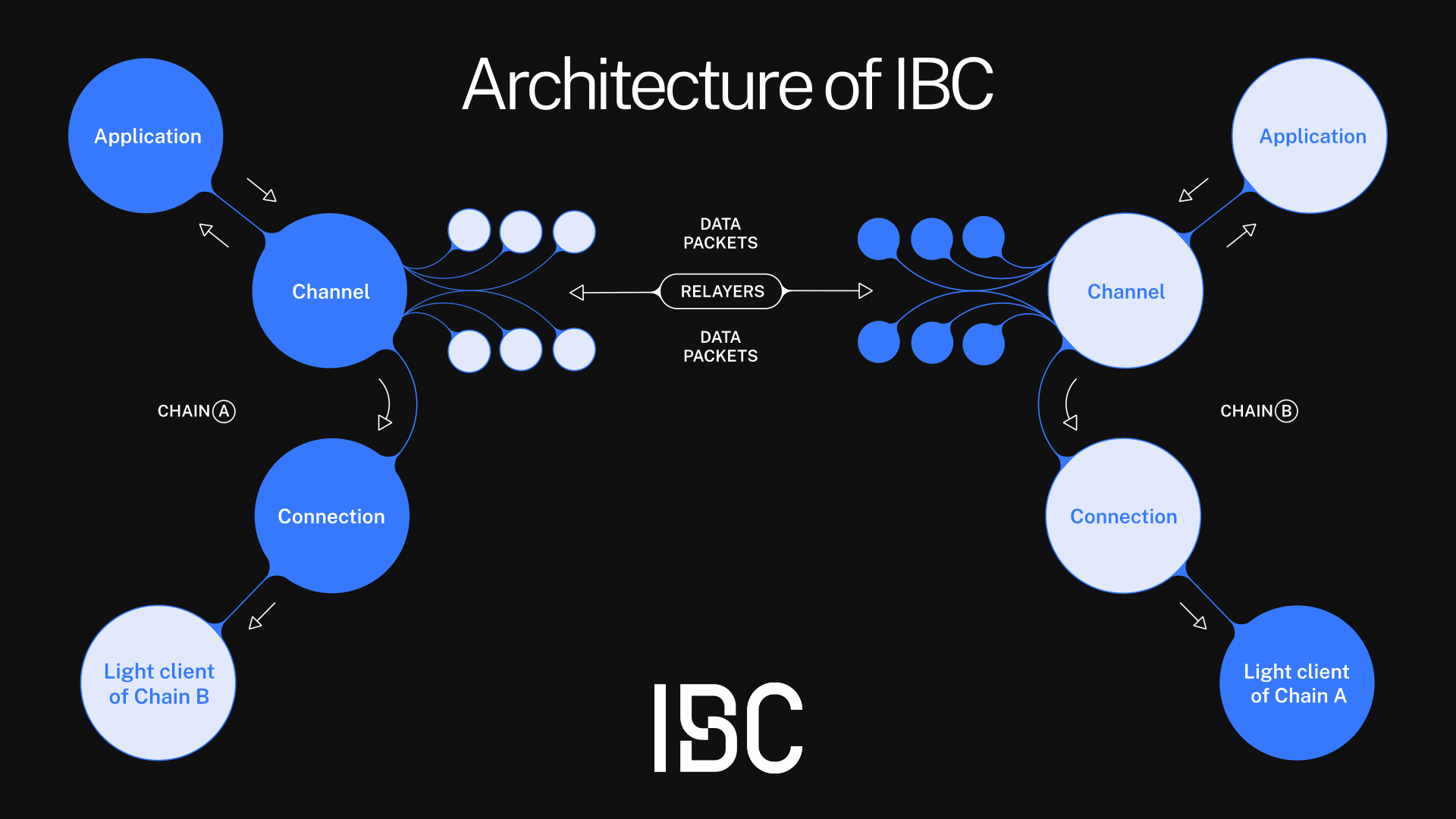
Decide how you will move assets. Native IBC transfers are the safest and most cost-effective method, as they rely on light clients rather than centralized custodians. Use native IBC for established pairs like ATOM-USDC. Reserve centralized bridges only for urgent needs or when native liquidity is absent. Always verify the destination address and chain ID before initiating a transfer.
Look for chains that offer unique value beyond simple token transfers. Celestia provides modular data availability, while dYdX offers advanced perpetual trading. Osmosis remains the leading decentralized exchange for liquidity. Choose zones that align with your investment thesis, whether that is infrastructure, DeFi, or gaming. Avoid chains that merely replicate existing functionality without a clear advantage.
Staking is not just about yield; it is about influence. Delegate to validators who vote on proposals that shape the ecosystem. Consider delegating to multiple validators to reduce slashing risk. Reinvest rewards to compound your holdings. Active participation helps you stay informed about network upgrades and potential vulnerabilities before they impact your assets.
watchouts: weak options and misleading claims
The promise of Cosmos IBC often outpaces the reality for portfolio managers. While the protocol enables seamless data transfer, several common assumptions lead to unnecessary risk or missed opportunities. Before allocating capital to multi-chain strategies, evaluate these specific pitfalls.
1. Relying on deprecated IBC applications
Many tutorials and older guides reference the cosmos/ibc-apps repository as the standard for building cross-chain logic. This repository is no longer actively maintained and is scheduled to be archived in 2026. Projects that still depend on these legacy modules face significant security and compatibility gaps. Always verify that a chain uses the current IBC-Go documentation standards rather than outdated middleware.
2. Assuming all "Cosmos" tokens are equal The ecosystem contains hundreds of independent blockchains. Not all are interoperable via IBC, and not all offer meaningful utility. Investing in a token simply because it shares the "Cosmos" branding often leads to exposure to low-liquidity assets with no cross-chain connectivity. Distinguish between hub tokens that facilitate connectivity and zone tokens that may remain isolated.
3. Overlooking the "weak link" in atomic swaps Cosmos IBC allows for atomic swaps and multi-chain smart contracts, but the security of the swap is only as strong as its least secure chain. If you bridge assets to a smaller, less audited zone, you assume that zone's specific validator set risk. A failure on the receiving end can lock funds or cause loss, even if the sending chain is secure.
FAQ: Common questions about Cosmos IBC and ATOM
Does Cosmos (ATOM) have a future? ATOM’s relevance depends on its role as the governance and security hub for the IBC interchain. As the ecosystem shifts toward sovereign app-chains connected via IBC, ATOM’s utility evolves from a simple store-of-value to a staking asset that secures the broader network. If the interchain model gains traction, ATOM remains central; if chains fragment, its value proposition may dilute.
How does Cosmos IBC work? IBC (Inter-Blockchain Communication) is a protocol that enables independent blockchains to transfer data and tokens securely. It uses light clients to verify proofs from other chains and relayers to transmit these proofs. This allows for trustless, permissionless communication without a central bridge, forming the backbone of the "Internet of Blockchains."
Who are Cosmos’ main competitors? Cosmos competes in the interoperability and app-chain space. Key rivals include Polkadot, which uses a shared security model via parachains, and Layer-2 scaling solutions like Arbitrum or Optimism that offer cross-chain messaging within the Ethereum ecosystem. Cosmos distinguishes itself by prioritizing sovereign chains over shared security.
What is the latest news on Cosmos (ATOM)? Recent developments focus on IBC v2, which aims to improve cross-chain efficiency and introduce new middleware capabilities. The ecosystem continues to expand with new app-chains launching monthly. Keep an eye on the Interchain Foundation’s announcements for updates on governance proposals and technical upgrades to the Cosmos SDK.
No comments yet. Be the first to share your thoughts!