
Cosmos IBC limits to account for
The Inter-Blockchain Communication (IBC) protocol is the backbone of the Cosmos ecosystem, enabling independent blockchains to exchange data and assets. While this interoperability is often cited as a primary advantage, the technology faces specific operational constraints that developers and users must navigate.

Connection Handshakes
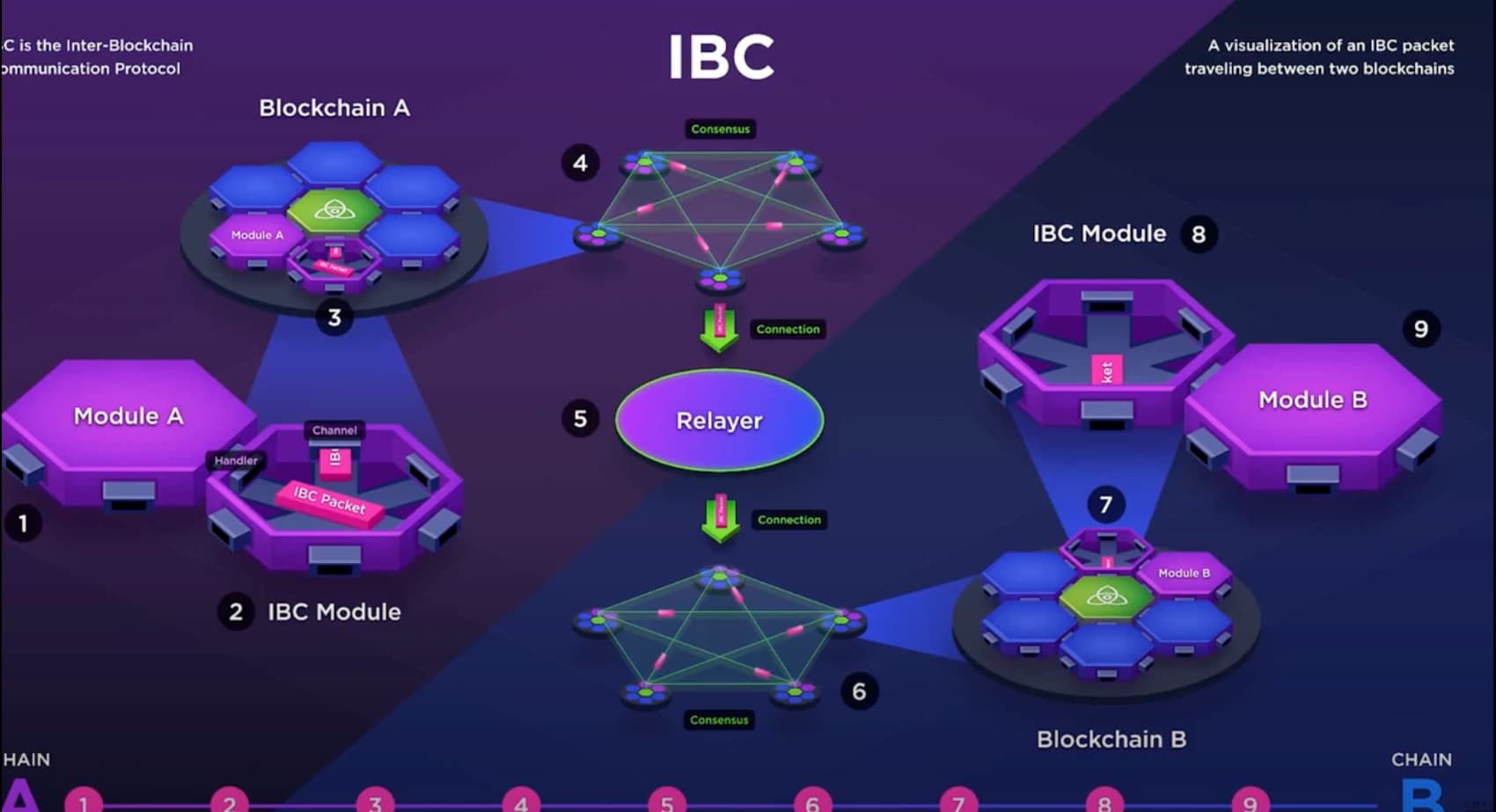
IBC does not allow immediate communication between chains. Before any data or tokens can move, a strict connection and channel handshake must complete. This process establishes a secure path between two specific chains, ensuring that both sides agree on the state and rules of the transfer. This overhead adds latency, meaning IBC transfers are not instantaneous compared to intra-chain swaps.
No Native Cross-Chain Voting
A fundamental constraint is that IBC handles data and asset transfer, not consensus. One chain cannot vote on the state of another. For example, if a Cosmos zone needs to interact with a blockchain that uses a different finality model, IBC cannot force that chain to adopt Cosmos’s security guarantees. This separation preserves the sovereignty of each network but limits the ability to create unified, cross-chain governance structures.
Liquidity Fragmentation
Because IBC connects independent ledgers, liquidity is often scattered across dozens of different zones. A token might exist in multiple versions on different chains, each with its own liquidity pool. This fragmentation can lead to price discrepancies and higher slippage for users attempting large trades. Aggregators help mitigate this, but the underlying structure remains inherently siloed compared to a single, unified chain.
Upgrade Complexity
IBC is not a static protocol; it evolves through upgrades like IBC v2. However, for cross-chain communication to work, both the sending and receiving chains must be running compatible versions. If one chain upgrades its IBC implementation while the other lags behind, the connection may break or become insecure. This creates a coordination challenge, requiring developers to align their upgrade schedules carefully to maintain seamless interoperability.
Cosmos IBC choices that change the plan
Use this section to make the Cosmos IBC decision easier to compare in real life, not just on paper. Start with the reader's actual constraint, then separate must-have requirements from details that are merely nice to have. A practical choice should survive normal use, maintenance, timing, and budget. If a recommendation only works in an ideal situation, call that out plainly and give the reader a fallback path.
| Factor | What to check | Why it matters |
|---|---|---|
| Fit | Match the option to the primary use case. | A good deal still fails if it does not fit the job. |
| Condition | Verify age, wear, and service history. | Hidden condition issues erase upfront savings. |
| Cost | Compare purchase price with likely upkeep. | The cheapest option is not always the lowest-cost option. |
Choose the next step
Cosmos IBC works best as a clear sequence: define the constraint, compare the realistic options, test the tradeoff, and choose the path with the fewest hidden costs. That order keeps the advice usable instead of decorative. After each step, pause long enough to check whether the recommendation still fits the reader's actual situation. If it depends on perfect timing, unusual access, or a best-case budget, include a simpler fallback.
-
Verify the sourceUse this as a welfare screen: confirm the breeder, rescue, store, or private seller can explain care history and answer basic husbandry questions.
-
Check health signsLook for clear eyes, alert behavior, healthy weight, clean vent area, and no obvious swelling, wounds, or stuck shed.
-
Prepare the enclosureHave heat, UVB, substrate, hides, food, and temperature checks ready before pickup or shipping day.
-
Plan transportConfirm pickup timing, shipping weather, packaging, and the first-week settling plan before paying.
Common Mistakes in Cosmos IBC
Interoperability sounds simple until you try to build it. The Cosmos IBC protocol is powerful, but many projects treat it as a magic bridge rather than a complex handshake. Here are three ways teams get it wrong, and how to avoid them.
Treating IBC Like a Standard Bridge
Most people think IBC works like a wrapped token bridge on Ethereum. It doesn’t. IBC uses a light client verification system that proves a transaction happened on another chain without trusting a central validator set. If your project assumes a standard bridge model, you’re ignoring the security guarantees that make IBC unique. You need to understand the "handshake" process before writing a single line of code.
Ignoring the Connection Handshake
IBC v1 requires a formal connection and channel handshake before any data moves. Many developers skip this step in testing, leading to silent failures in production. The protocol must agree on the connection state, the channel order, and the packet commitment. If you don’t implement the full handshake logic, your assets will sit in limbo, locked and inaccessible.
Overlooking the Timeout Mechanism
Packets can get stuck if the timeout window is too short or if the counterparty chain goes down. A common mistake is setting a fixed timeout that doesn’t account for network latency spikes. You need dynamic timeout logic that adjusts based on the current state of the receiving chain. Without this, your users will face failed transactions and confused support tickets.
Frequently asked questions about Cosmos IBC
What does IBC stand for in Cosmos?
IBC stands for Inter-Blockchain Communication. It is a protocol that allows independent blockchains to talk to each other, enabling the secure transfer of data and tokens across different ledgers without relying on centralized bridges or third-party intermediaries.
What does the Cosmos network do?
Cosmos provides the infrastructure for building scalable, application-specific blockchains that can interoperate. It empowers developers and organizations to create sovereign chains that share security and liquidity through the IBC protocol, effectively creating an "Internet of Blockchains" where assets and information flow freely.
Does Cosmos coin have a future?
ATOM’s role is evolving from a simple governance token to a stake asset for the entire ecosystem. Its future depends on the growth of the IBC network; as more chains connect, the demand for ATOM to secure the Hub and facilitate cross-chain transactions typically increases, though market volatility remains a factor.
Is Cosmos worth buying?
Whether ATOM is a good investment depends on your conviction in blockchain interoperability. It offers exposure to a broad ecosystem of connected chains rather than just one network, but investors should weigh this diversification against the token’s historically slower price appreciation compared to newer, high-hype Layer 1s.
No comments yet. Be the first to share your thoughts!